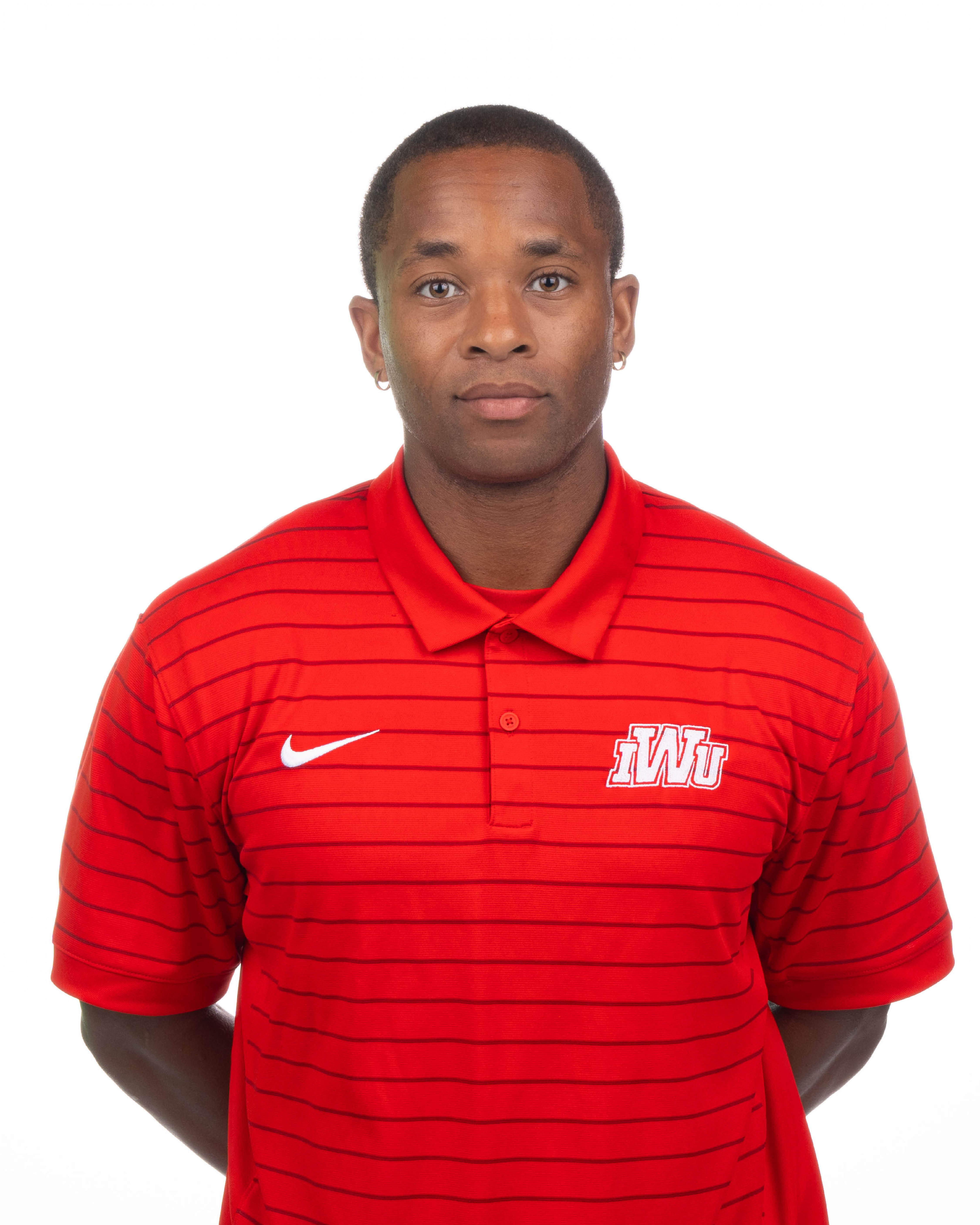
Warren Rogers, Ph.D., Blanchard Chair of Physics at IWU, has spent his career exploring the nucleus, the tiny core of the atom where most of its mass resides.
A Professor Driven by Curiosity and Mentorship
Through accelerator-based research at major laboratories across the country, work that uses high-speed particle beams to probe atomic nuclei, he investigates how those nuclei behave, break apart, and form new elements.
His scholarly work is paired with a commitment to developing young scientists through close mentorship and meaningful research experiences.
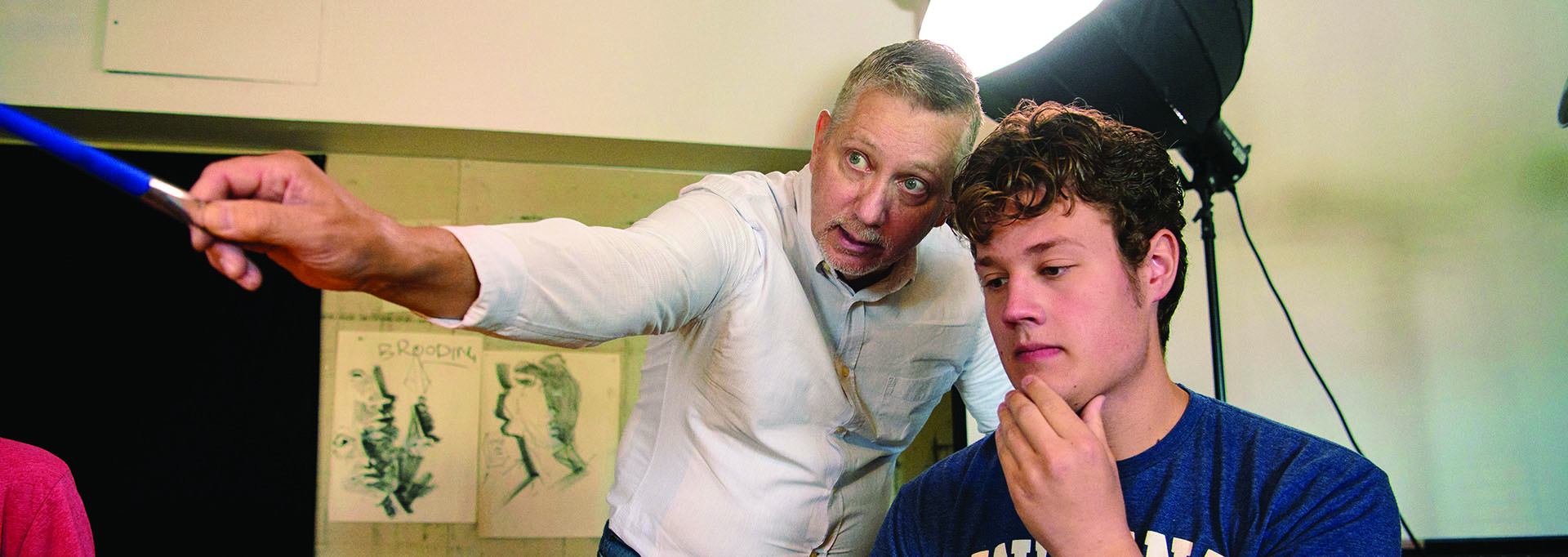
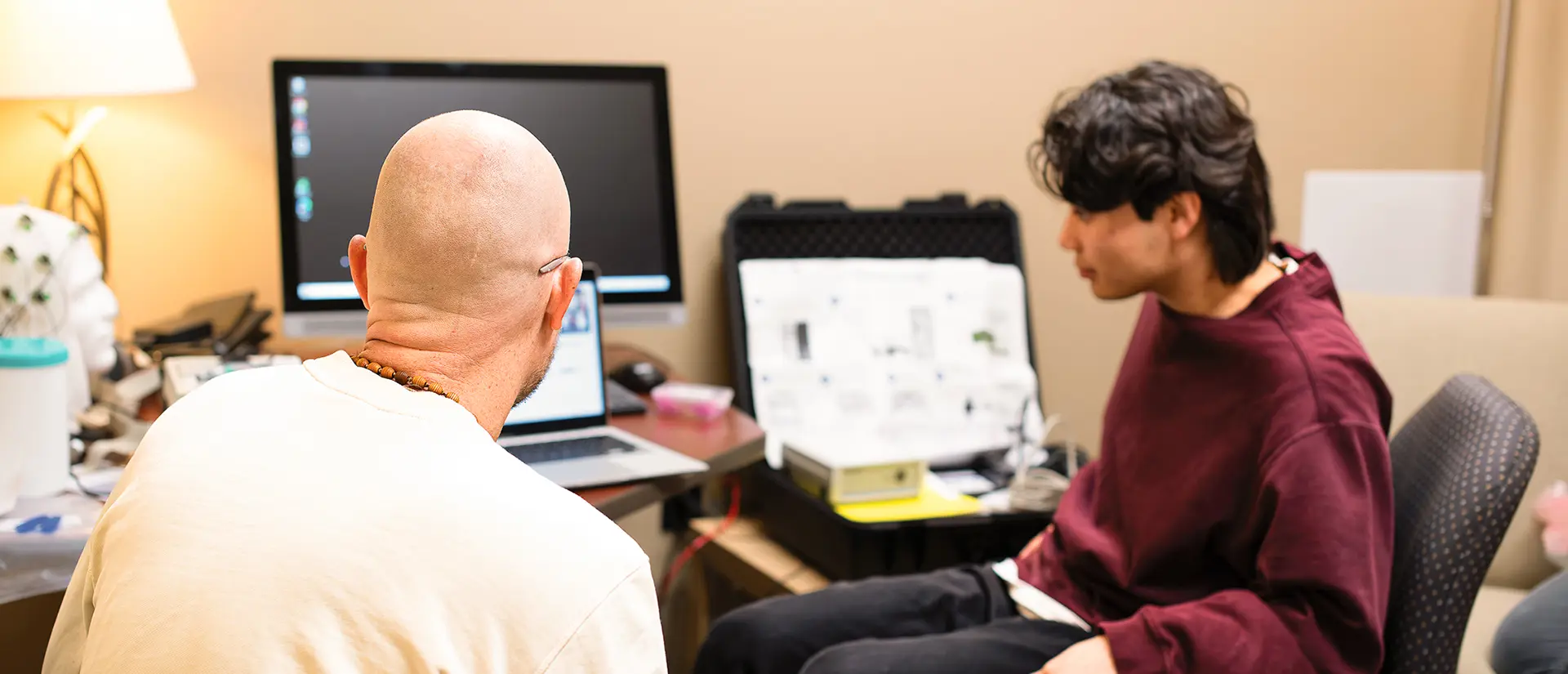
For more than two decades, Rogers has made it a priority for IWU undergraduates to participate directly in nuclear physics experiments. Such opportunities are rare at smaller institutions, yet IWU students regularly assist with research projects, contribute to the development of scientific equipment, and work alongside researchers at national laboratories. Their involvement has made IWU a respected partner in one of the most significant nuclear science collaborations in the United States.
Entering The World of Neutron Detection
A major part of Rogers’ research takes place through the Modular Neutron Array (MoNA) Collaboration, a national partnership that includes faculty and students from IWU. MoNA, first built in 2002, is an array of plastic scintillator bars that produce tiny flashes of light when struck by fast neutrons. These flashes act like breadcrumbs, helping scientists track how unstable atoms fall apart during high-energy collisions at the Facility for Rare Isotope Beams (FRIB) at Michigan State University. LISA, a second detector array added in 2010, expanded the system’s coverage and improved its ability to study rare isotopes.
IWU students helped construct both arrays, strengthening the university’s role in the collaboration and opening doors for undergraduates to take part in national research efforts. The MoNA Collaboration is now designing the Next-Generation Neutron Array, known as NGn, which will provide sharper spatial resolution and support studies of larger and more complex nuclei. This added precision will help scientists better understand how unstable isotopes form and decay, a key part of nuclear structure research and a contribution to understanding the universe God has created.
A Career Shaped by Teaching and Research
Rogers’ path to nuclear physics began in high school, though he originally hoped to study astronomy. A graduate school internship at a nuclear lab shifted his interests and sparked a passion for teaching. After earning his doctorate, he taught at Washington State University, where he saw how personal mentorship can shape a student’s confidence and trajectory.
Those experiences eventually led him to IWU, where small classes allow deeper investment in students. Through partnerships with FRIB and Los Alamos National Laboratory in New Mexico, Rogers gives students access to questions and tools that define the field today.
Students at the Forefront of Discovery
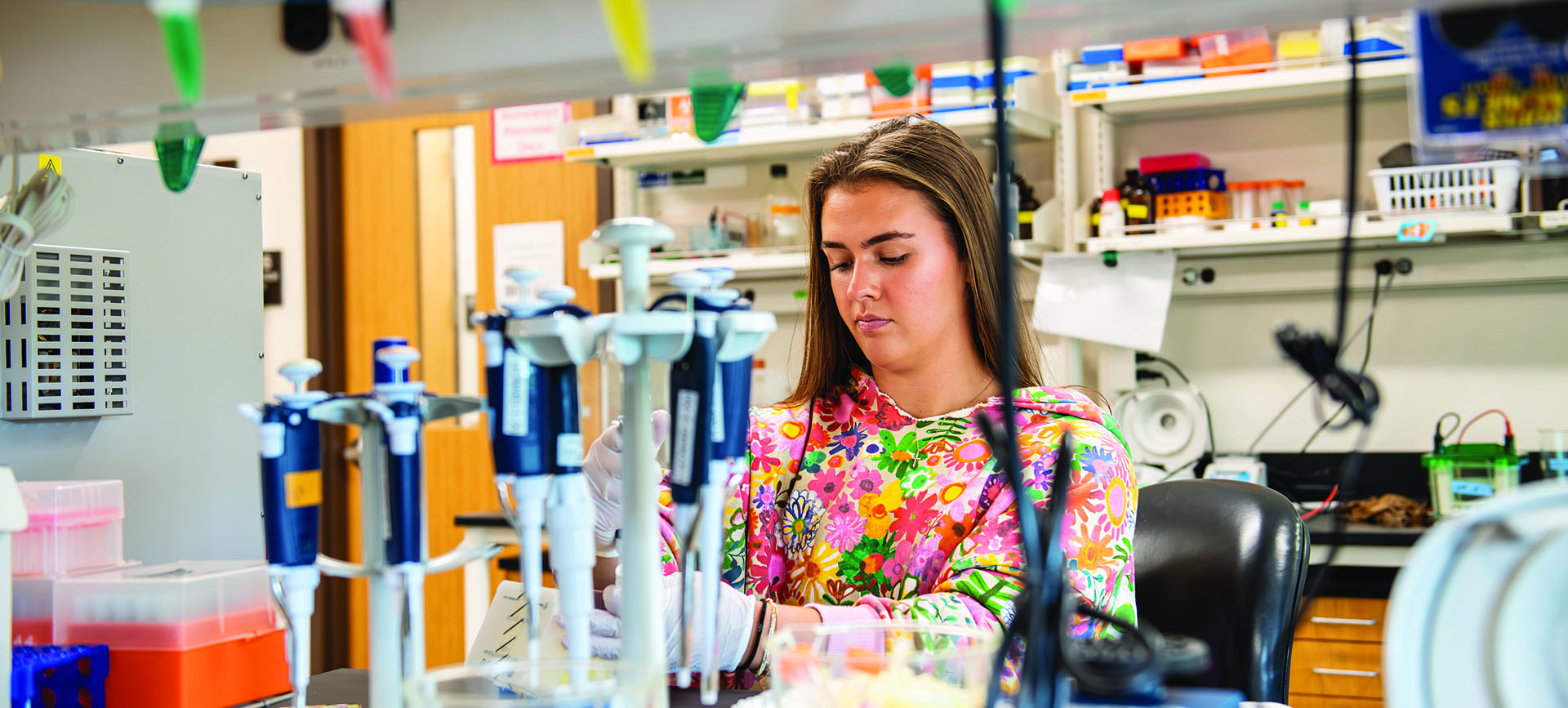
IWU students, including Olivia Lucas, have contributed to the NGn project. In the summer of 2024, Lucas worked with Rogers to develop a prototype detector tile. She spent hours soldering more than 200 components, where precision was key. “Even the smallest error could affect the detector’s performance,” Lucas said.
This new tile will help scientists study muons, subatomic particles similar to electrons but heavier. Produced in cosmic rays and particle collisions, muons can travel through dense materials, making them valuable for investigating the internal structure of objects.
The hands-on nature of the tile prototype detector project offered more than just technical training; it gave Lucas a glimpse into the life of a working scientist. That experience has shaped her career path.
“Doing this research helped me realize that any student is capable of pursuing something as daunting as a Ph.D.,” she said. Many of Rogers’ students have gone on to earn doctoral degrees at other universities, pursuing careers in science and engineering.
Why Foundational Research Matters
Rogers emphasizes that the research students contribute to has long-term significance. Foundational nuclear science expands knowledge about subatomic particles and helps explain how elements are formed.
“We are driven to learn more about atomic nuclei and how the elements are created in stars,” he said. “We are, after all, made of that same star stuff.”
Many scientific breakthroughs, including magnetic resonance imaging technology, trace their origins to early physics experiments. Rogers believes discoveries being made today may lead to similar advances.
A Christ-Centered Calling
Partnerships with national laboratories broaden opportunities for IWU students and help them grow as young scientists. For Rogers, these collaborations are also connected to a deeper understanding of vocation. At IWU, the pursuit of scientific knowledge is shaped by discipleship to Christ and a commitment to steward creation faithfully, without allowing technology or discovery to replace human responsibility or humility.
From building detectors to studying cosmic particles, IWU students are not only learning science. They are participating in research as an expression of what they were created to do, contributing to knowledge in ways that reflect Christ’s call to serve the world.