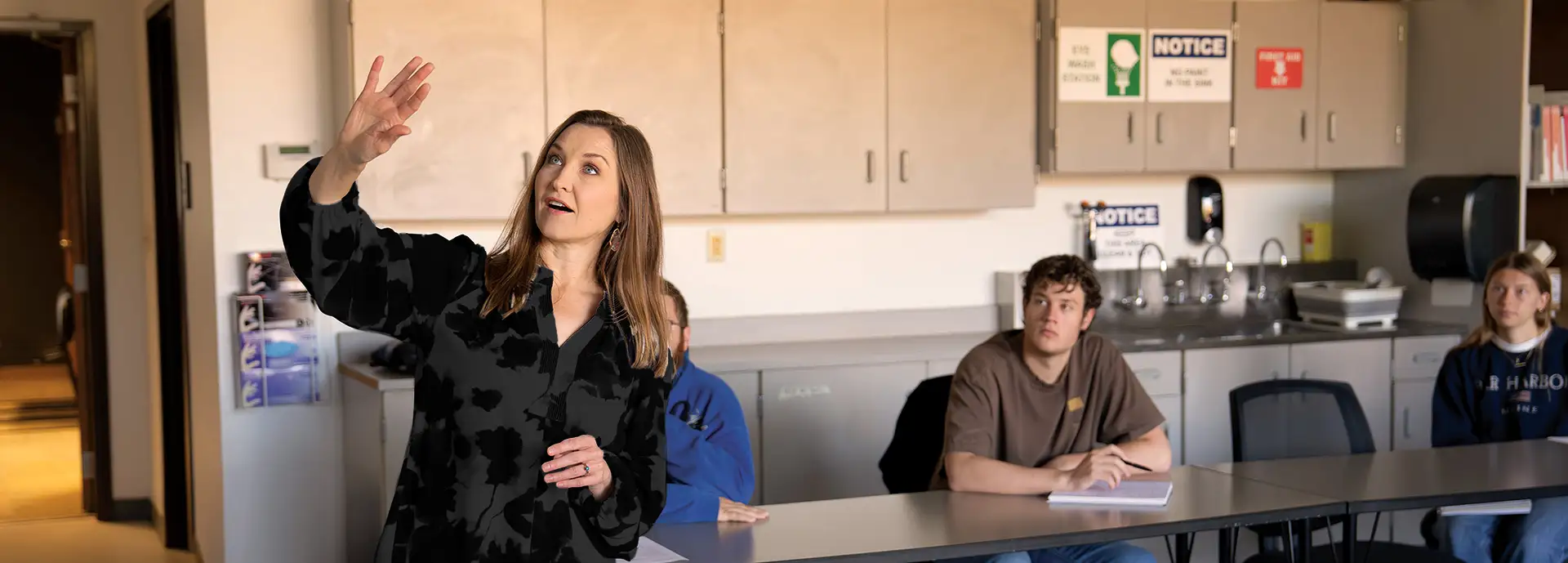
Jennifer Noseworthy, Ph.D.’s, credits her introduction to research as an undergraduate changed her career path and sparked a passion for scientific discovery. Now the chair of the Division of Natural Sciences at IWU, she studies insect biodiversity and native bee populations, work that began during her time at Gordon College.
Shaped By Undergraduate Research
That early experience helped her see biology as both scientific inquiry and faithful stewardship of creation. She now guides IWU students to approach research with the same understanding that careful study of the natural world is part of humanity’s responsibility to care for what God has made.
Today, she and her students lead a five-year, U.S. Department of Agriculture (USDA)-funded study examining how pollinator gardens influence biodiversity, food production, and native bee health. The work comes at a critical time, as bee populations decline because of habitat loss, pesticides, and environmental pressures.
Wildcat Farms: A Living Classroom
The research takes place at Wildcat Farms, which includes two sites on IWU’s campus and several community gardens throughout Grant County, Indiana, home to IWU’s Marion campus. The farm serves as a hands-on laboratory where students study biodiversity and learn sustainable agriculture while supporting local families.
“Wildcat Farms serves multiple purposes,” Noseworthy said. “It is a training ground for our students to learn how to grow food and produce it in an area where there is great need. But we also look at how our agricultural practices impact pollinators and insect biodiversity.”
Each year, the farm donates about 4,000 pounds of produce to community organizations. It also offers seasonal produce and floral subscriptions. For Noseworthy, this work is deeply connected to her Christian faith, which shapes her commitment to caring for creation and feeding neighbors.
Studying Bees and Biodiversity
Noseworthy’s USDA project began in 2021 and examines how pollinator gardens influence bee diversity, insect populations, and crop yields. Early findings show that gardens designed with pollinators in mind tend to produce greater bee diversity and stronger crop outcomes.
The research team also documented a non-native bee species, Hylaeus hyalinatus, after encountering a specimen they could not identify. A specialist later confirmed it as non-native to Indiana, and the finding was published alongside a second non-native bee discovery in the region. While these species are not currently a threat, the team continues to monitor their presence.
The study also examines simple interventions that help native bees thrive, such as planting native flowers and providing nesting spaces. “Bees in general are in decline,” Noseworthy said. “Honeybees receive a lot of attention, but our native bees, of which there are 200 to 400 species in this state alone, are also struggling.”
Training Future Scientists
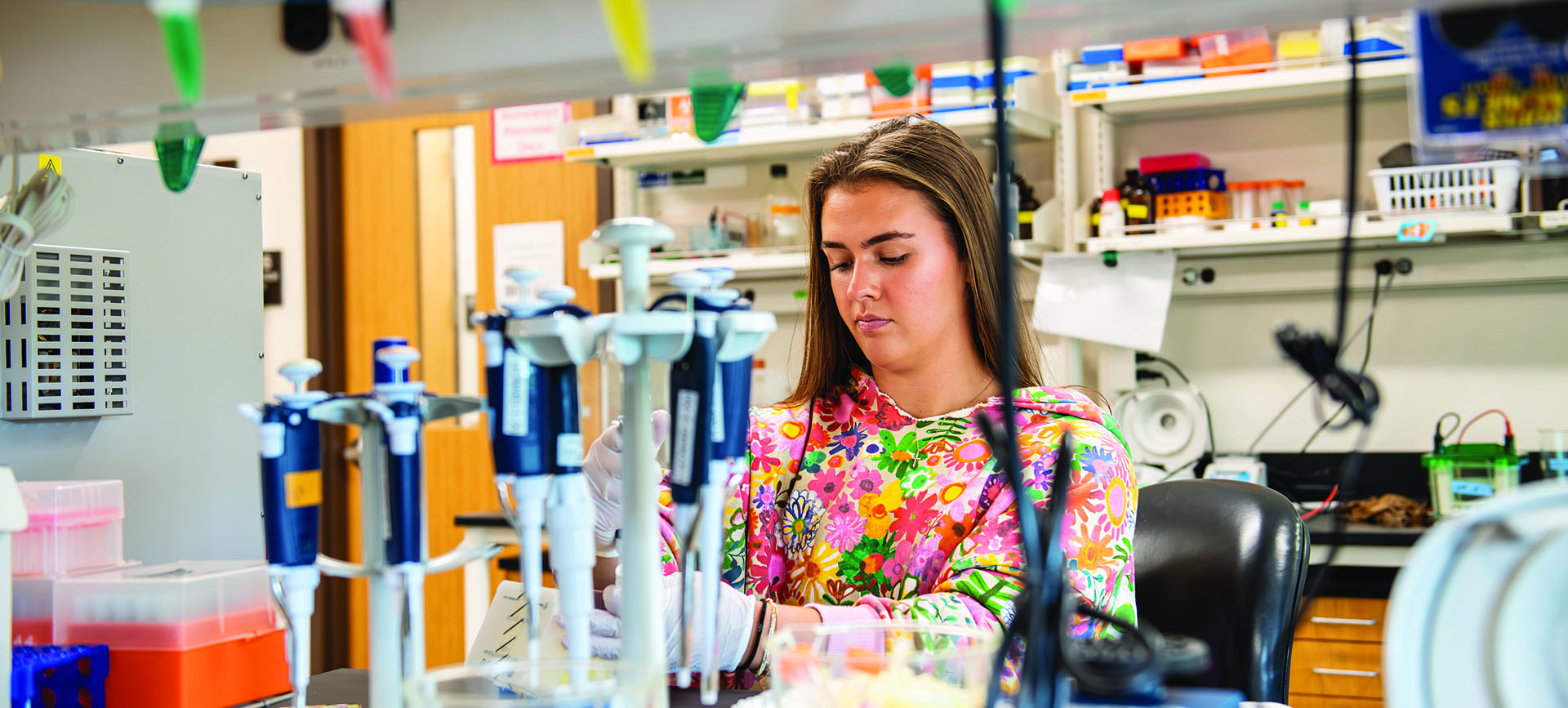
A major benefit of the project is the hands-on training it provides for undergraduates. “I keep track of all my research students, and they are succeeding,” Noseworthy said. Students who have worked in her lab have earned a 100 percent acceptance rate into graduate programs.
The program draws students from across the country, including those from large research institutions. One student who later completed a program at one such university told Noseworthy that the experiences were markedly different. At IWU, she received direct mentorship and hands-on instruction that shaped her confidence, skills, and sense of purpose in using science to serve others.
Helping The Community Understand Pollinators
Noseworthy believes research has little impact if people do not understand its value. Early findings from the pollinator study have practical implications for Indiana farmers and gardeners, especially in understanding how to support native bees.
“We know that science communication is something that is often missing in this generation of scientists,” she said. “My job is to teach students how to take their research and translate it so the public understands why it matters.”
A key part of that work involves educating communities about choosing plants that truly support pollinators. Many ornamental plants do not produce nectar or pollen. Planting native, pollinator-friendly species can strengthen bee populations, even in small garden spaces.
A Growing Impact
Wildcat Farms blends research, student development, and community service. Through this work, Noseworthy is advancing knowledge of bee biodiversity, supporting local food systems, and preparing future scientists to participate in Christ’s redemptive care for creation.
The most rewarding part, she said, is watching students grow. “I love seeing students gain confidence, not just in their ability to do research, but in their ability to adapt, problem-solve, and communicate their findings.”
With continued funding and community partnerships, the project will continue to strengthen both scientific understanding and the well-being of Grant County. Noseworthy hopes her students leave with more than technical training. By learning to approach research as faithful stewardship, they come to see science as a way to serve neighbors, protect creation, and honor Christ, through whom all things were made.