Public safety is about people, but it is not guided exclusively by intuition. This field gains strength through quantified and meticulously documented practices, implemented according to strict data standards. Data forms a solid foundation, providing ample evidence that allows agencies or departments to move beyond guesswork and instead make decisions based on measurable insights.
Sophisticated technologies fuel emerging roles in real-time information centers (RTICs), where analysts monitor live feeds and evaluate huge volumes of data to support crime prevention. They also guide strategies across a range of law enforcement jobs, with data literacy increasingly built into police officer training and expected at all levels of policing — from patrol officers to investigators and even command staff. Data-driven strategies introduce significant risks, however, best navigated through technical safeguards and ethical decision-making.
Why Ethics Matter in Crime and Data Analysis
Ethics should guide all decisions in law enforcement and forensic science, but often, their role in public safety is discussed in the context of urgent or high-stakes situations. For example, much is made of the choice to de-escalate during tense encounters, but there are many other ways in which ethical lapses can emerge, often in the technical practices that occur behind the scenes.
The Real-World Stakes of Getting It Wrong
Professionals in data-driven roles (such as crime analyst jobs or intelligence analyst jobs) must always remember that data and models represent (and ultimately, impact) real people. It can be easy to lose sight of this reality, as data often appears abstract at face value. Behind every number or algorithm, however, is a real person who sees the impact of crime or policing practices.
When information is used irresponsibly, the very communities that data analytics is meant to protect can ultimately suffer. Biases, errors, or conflicts of interest impede resource allocation and emergency response. What's more, privacy breaches leave community members feeling exposed and may undermine trust in law enforcement. Practices such as problem-oriented policing and hot spot policing hold great potential for reducing crime, but can easily introduce ethical violations if the data that supports these strategies is not properly managed.
How Ethical Practice Protects Communities and Careers
Ethical practice allows crime analysts and other data-driven professionals to use powerful digital tools to protect people rather than harm them. By maintaining strict ethical standards, analysts leverage data for community-oriented purposes but help mitigate the risks that often accompany the expanded use of data: misclassification, algorithmic bias, privacy violations, or even community backlash.
Data Quality: The Foundation of Ethical Analysis
Data-driven practices only succeed when guided by relevant and accurate information. This begins with gathering high-quality data from a wide range of reputable sources. Agencies or units (such as RTICs) draw on everything from Automatic License Plate Recognition (ALPR) systems to social media or even camera networks and biometric surveillance. GIS crime mapping brings a visual element to this effort via geospatial analysis.
Analysts also leverage details from the National Incident-Based Reporting System (NIBRS). Through NIBRS crime data, analysts gain incident-level insights. This helps them contextualize surveillance or sensor-based findings while indicating broader patterns.
Contemporary practices remain largely driven by the CompStat process, which provides a reliable operational structure to improve accountability as insights lead to action. Meanwhile, advanced open-source intelligence tools and OSINT techniques help analysts make sense of abundant data. User-friendly dashboard reporting places key information within reach, but must be supported by data literacy and strong ethical safeguards.
Why Bad Data Leads to Bad Decisions
The wrong information can amplify existing bias in data analysis, with flawed inputs leading to similarly flawed outputs. If predictive models are trained on inaccurate or incomplete datasets, distortions will inevitably end up in forecasts, guiding potentially harmful policing or emergency management strategies.
Examples of 'bad' data include misclassified offenses, biased collection (from neighborhood-specific over policing, for example), license plate misreads in Automated License Plate Recognition (ALPR) systems, and an overreliance on unconfirmed social media inputs.
Verifying and Cleaning Data Before You Act
All information should be treated with skepticism before it's built into actual decisions or practices. Data quality checks confirm that records reflect supporting evidence and are free of errors. This meticulous approach should extend to the very practices that guide recordkeeping and reporting in the first place. Experts recommend data weighting to provide more representative views of communities under study. Python for analysts enables standardized inputs and accuracy checks to guide the responsible use of data.
Cleaning and verification also mean confirming that analysts use the right codes and categories, and that uniform definitions allow for consistent logging. Repeated entries should be removed and anomalies flagged to prevent duplicates or outliers from skewing data or ensuing takeaways. Formats should be standardized and, when possible, reports should be cross-checked against reliable resources.
Recognizing and Checking for Bias
There is always potential for bias in criminal justice and emergency management. All professionals, no matter how well-meaning, carry their own assumptions, shaped through diverse backgrounds and experiences. Data-driven practices may appear to sidestep bias altogether, but the reality is far more complicated, given the sheer subtlety with which bias can be introduced.
Once bias enters data-driven systems, it has a way of escalating. When models learn from flawed data, they build those distortions into new predictions that reinforce earlier biases. As feedback loops suggest that flawed predictions are correct, biases become entrenched.
How Bias Enters Data and Analysis
Data-driven tools pick up on subtle biases present in the humans who develop, implement, and interact with these systems. Researchers identify three main types of bias in crime prediction software: design bias, training bias, and interaction bias.
Design bias appears as algorithms are created and often involves the "improper selection of predictive variables." Training bias occurs when models are trained on skewed historical datasets and, in turn, produce skewed results. Through interaction bias, these issues are amplified as human users reinforce incorrect assumptions based on how they work with predictive systems. This can look a lot like confirmation bias, with analysts favoring outputs that reflect their own (potentially misguided) assumptions.
Different data-driven strategies can amplify different types of biases. For example, link analysis risks suggesting criminal associations that do not actually exist, often in response to incorrect interpretations of shared attributes.
Building Bias Checks Into Your Process
Bias checks provide tangible safeguards that reveal when data-driven practices are likely to produce skewed conclusions. These checks should address the many ways in which bias can enter analytical practices. Begin by reviewing data sources and examining how various groups are represented within the data.
Stress-test models to see how they respond to varying inputs and integrate fairness metrics to show whether models treat various groups equitably. Interaction bias can be countered through blind testing and external reviews, although it may also be worth introducing workflow designs (such as separated tasks or rotated responsibilities) to avoid entrenched bias.
Policy Constraints and Legal Boundaries
Strict rules and regulations govern the use of data in investigations and other elements of criminal justice, establishing boundaries to prevent the misuse of sensitive information. These rules exist at the state and federal level, with overlap sometimes making it difficult to know which practices are acceptable in a given region or situation.
Legal literacy allows data-driven professionals to better navigate differing standards and safeguards. All this may be done in the name of compliance, but overarching principles should remain top of mind. The goal of these constraints, after all, is to further protect the communities served by predictive models and data analysis.
Understanding the Rules That Govern Analysis
A complex web of regulations determines how public safety information is legally collected and interpreted. These requirements fall into several categories, encompassing legal rules (such as constitutional protections and privacy laws) as well as departmental policies that build legal priorities into everyday tasks and routines.
Procedural rules provide clear blueprints for how data is stored and how reporting proceeds, making it easier to adopt and maintain consistent practices. It is the analyst or forensic scientist's responsibility to know which rules apply in any given situation and how they shape everyday practices for cleaning, handling, and disseminating sensitive data.
Staying Within Legal and Departmental Limits
Practical boundaries help data-focused teams understand what complex rules look like in practice. Staying within legal or departmental limits is far easier when using targeted tools and protocols to guide all practices involving sensitive data. Standard operating procedures (SOPs) and standards checklists show how seemingly abstract ethical priorities can become repeatable practices. SOPs may define data access protocols, anonymization requirements, incident reporting practices, or chain of custody documentation.
Privacy and Civil Liberties Considerations
Community safety and well-being are priorities across the spectrum of criminal justice, but efforts to safeguard communities should not come at the cost of individual rights or liberties. In reality, these are not competing forces — rather, they support one another.
Civil liberties form the very foundation on which public safety rests, allowing individuals to feel respected and secure. As individuals feel more confident that law enforcement will respect their rights, they become more inclined to buy into the system and to lend their support through cooperation or even preventive measures.
Balancing Public Safety With Individual Rights
Although public safety and civil liberties support one another on a broad scale, there will be situations in which these priorities seem to interfere with one another. For example, analysts may view surveillance data as critical to safety because it can potentially uncover alarming trends related to criminal activity. Realistically, surveillance activities spell long-term trouble when they undermine the right to privacy, causing community members to feel suspicious or infringed upon.
Balance emerges as analysts work with legitimately collected information and as they acknowledge that in-the-moment trend analysis cannot come at the cost of community support. When ethics (and specifically, bias mitigation) are purposefully built into all stages of data collection and analysis, teams can feel confident in their ability to strike this delicate balance.
Handling Sensitive Data Responsibly
In public safety, data analysts will inevitably need to handle sensitive information, and, when they do, they must be prepared to apply safeguards that avoid placing individuals at risk. Minimization and anonymization form the basis for this effort, limiting the extent to which personally identifiable information is collected.
Cybersecurity measures such as access controls and encryption add powerful layers of protection. Compliance with the FBI's Criminal Justice Information Services (CJIS) Security Policy is crucial, impacting a wide range of agencies and vendors.
Audit Trails and Accountability in Law Enforcement
In public-facing roles, auditing is often described in the context of uncovering fraud or waste in government programs. This is important, but in an increasingly data-driven field, audits serve another critical function: they help confirm that information is used ethically and responsibly. The audit trail is the ultimate accountability tool, documenting who accesses data and under what circumstances.
Why Documentation Protects Everyone
Analysts are less likely to misuse sensitive data when forced to meticulously track their data-centered decisions and actions. Documentation fuels transparency, turning the use of data into a publicly visible effort. This takes many forms, encompassing everything from access logs to process notes, retention records, and incident reports.
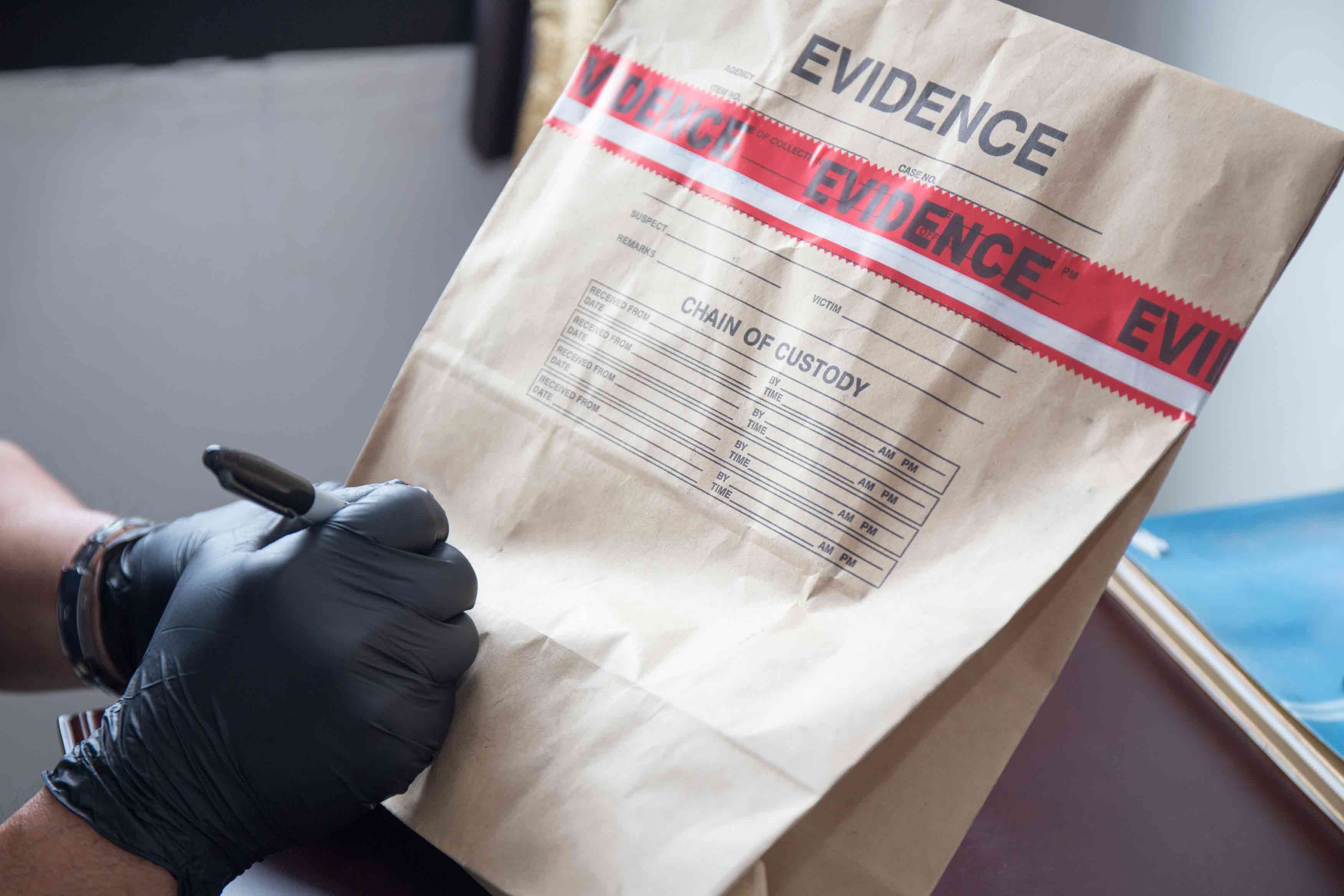
In ethical data analysis, the value of documentation echoes many key practices in crime scene investigations. No matter the nature of the evidence, chains of custody detail sequences of control and transfer so that evidence is accounted for at all stages of analysis. This is a critical component of digital forensics and vital to the role of the cyber security analyst.
Building Transparency Into Your Work
Data-driven practices can be described as transparent when processes are clear and explainable. This prevents a phenomenon known as the black box problem, in which opaque systems make it difficult to discern how or why certain conclusions were reached. Standardized protocols improve transparency in policing by limiting ambiguity. This might involve keeping detailed logs or version histories to track changes, while also using approval trails to make oversight more visible.
Making Ethical Analysis Part of Your Practice
Ethical insight can support principled decision-making, but its impact will remain limited if simply practiced on a whim. Rather, moral values need to be strategically built into every daily practice, with strict routines and regimens ensuring that principled conduct is never left up to chance. This plays out in everyday policy application and documentation, with the small moments coalescing to form the big picture of professional integrity.
Habits and Standards That Support Integrity
Ethical analysis involves far more than profound, lightbulb-style moments of insight. These breakthroughs can feel exciting at times, but seemingly powerful realizations can fade away quickly if takeaways aren't put into practice. Accountability in law enforcement emerges as values are built into routines and regimens. This begins with identifying core values and then determining where everyday practices fall short. From there, structured, quantifiable improvements can be implemented — and closely tracked to confirm meaningful improvement.
Principled habits are best built proactively, ideally examined in detail through college-level programs that explore criminal justice theories and principles in practice. Earning a criminology degree or homeland security degree means committing to data ethics training while also building technical competencies that integrate these principles into cutting-edge practices.
Ethical Analysis as a Professional Responsibility
Ethics should be deeply ingrained in the work of the crime analyst or crime scene investigator. Moral values encourage data-driven professionals to maintain a clear focus on civil liberties and the public good. Professionals should always recognize that data-driven practices center around real people and real communities, who deserve the utmost in respect and protection. This should be a clear priority in modern policing, as crucial to professional growth as technical skill development.
Prepare for the Future of Data-Driven Criminal Justice
Prepare for the criminal justice jobs of tomorrow and discover how you can use data to promote public safety and justice. Look to Indiana Wesleyan University for insight into technical practices and ethical standards, built through industry-relevant criminal justice degree programs.
The
Bachelor's Degree in Intelligence and Criminal Analysis integrates both sides of intelligence analysis, showing what it takes to protect communities while continuing to prioritize civil liberties. We encourage
deep ethical reflection but also use scenario-based training to put ethical problem-solving into action. Explore
accelerated options (such as public safety degree programs) and discover how, with our support, you can build the technical skills and ethical insight demanded in data-driven law enforcement.
Learn more or
apply today.