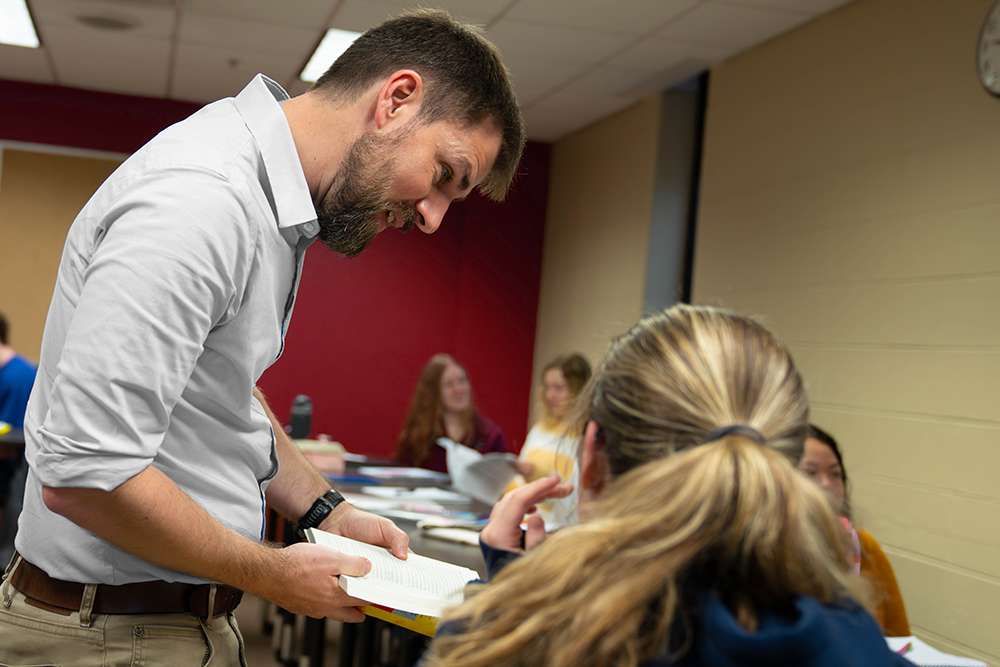
A student once told Davy Chinn, chair of the Division of Music and Theatre and assistant professor of music at IWU, that they didn’t believe in God. Then they asked if he would meet weekly for lunch to talk about it. Chinn replied, “I do like lunch,” and agreed.
Semester after semester, they sparred over apologetics. Chinn wasn’t sure anything he said was making a difference, but months after the student transferred to a secular university in another state, a message arrived: they had never been more excited about Jesus.
Chinn credits this to something beyond himself. “When I see that spark ignite in a student, it reminds me why my own spiritual formation matters,” he says. “If you’re not engaged in your own formation, it’s hard to help someone else grow.”
“A faculty member,” he adds, “who is active in strengthening their Christian faith, by the very nature of active development, will see an outpouring in how they treat students, interact with colleagues, teach, and respond to emails.”
That dynamic, the way a faculty member’s interior life overflows into students’ lives, lies at the heart of IWU’s Center for Faith and Learning. The center opened its physical home on campus this year, but its guiding question has long shaped IWU’s identity: What does it look like to integrate Christian faith into scholarship and teaching across every discipline?
Coffee with Cream
For David Davies, DMA, vice president of academic affairs and chief academic officer, the answer begins with a cup of coffee. Christianity at IWU, he argues, shouldn’t sit atop education the way whipped cream floats on the surface of a cup of coffee.
“Christianity should be like creamer poured into the coffee,” Davies says. “It becomes something new and more and can’t be separated out.”
That integration does not always develop intuitively, especially for faculty trained at secular institutions. The Center for Faith and Learning helps close that gap by connecting newer faculty with colleagues experienced in practicing faith within their disciplines.
“Done well,” Davies says, “education is discipleship.” Through conversations, workshops, and collaborative programming, faculty gather across departments to explore what faith-integrated scholarship looks like in fields ranging from the sciences to the humanities.
The goal is not a formula or compliance structure, such as simply adding prayer to a syllabus, but a deeper integration of faith that shapes the way faculty think, teach, and mentor students.
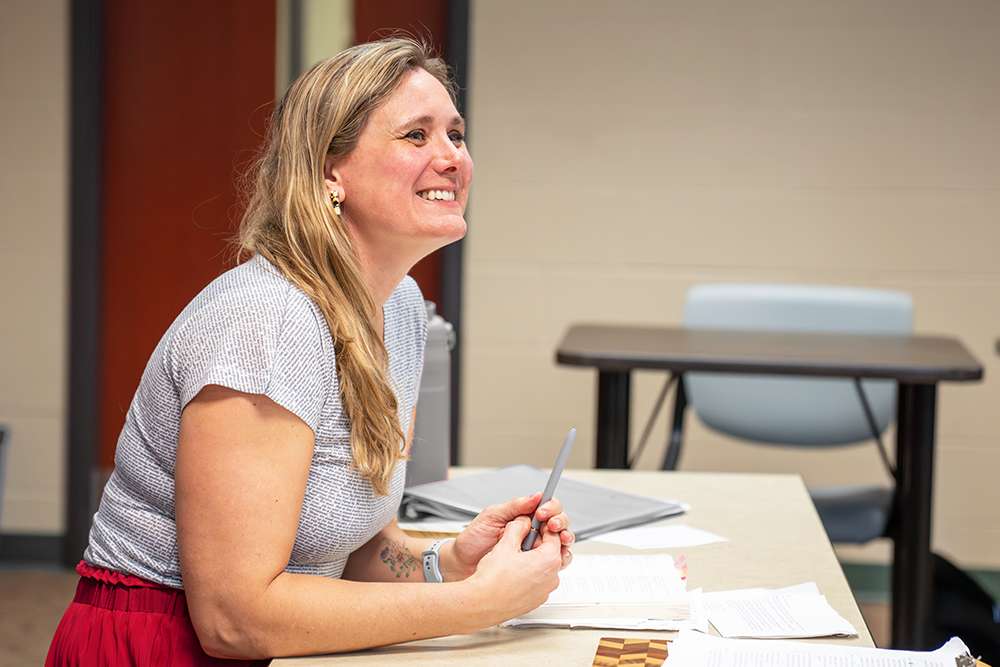
"WE NEED MODELS TO IMITATE. THE MORE OUR FACULTY ARE SPIRITUALLY FORMED, THE BETTER OUR STUDENTS WILL HAVE MODELS TO FOLLOW.”
LANTA DAVIS, PH.D.
Assistant Professor of English, Author of Becoming by Beholding
Models to Imitate
Lanta Davis, Ph.D., assistant professor of English and author of Becoming by Beholding, which inspired the first Common Learning Theme, describes this work in terms of formation.
“Formation often happens through imitation,” she says. “We need models to imitate. The more our faculty are spiritually formed, the better our students will have models to follow.”
Faculty who understand formation as active and practiced are better equipped to cultivate it in others. That is the vision guiding the Center for Faith and Learning. The center seeks to foster not compliance scaffolding for ornamenting syllabi with the occasional prayer, but a community of scholars being formed and, by virtue of that formation, shaping their students.
6
visiting scholars from nationally recognized universities*
7
concerts on campus, including VOCES8*
4
IWU Theatre Guild Productions*
*Stats provided by the Center for Faith and Learning