By 8:30 in the morning, more than an hour before chapel begins, the room is already filling. Students arrive first, followed by faculty and staff. Coffee cups are set down, phones are silenced, and Scripture is opened. Someone begins to pray aloud. Names are spoken before the Lord. Students whisper prayers for friends, their campus, and the speaker who will soon step onto the chapel stage.
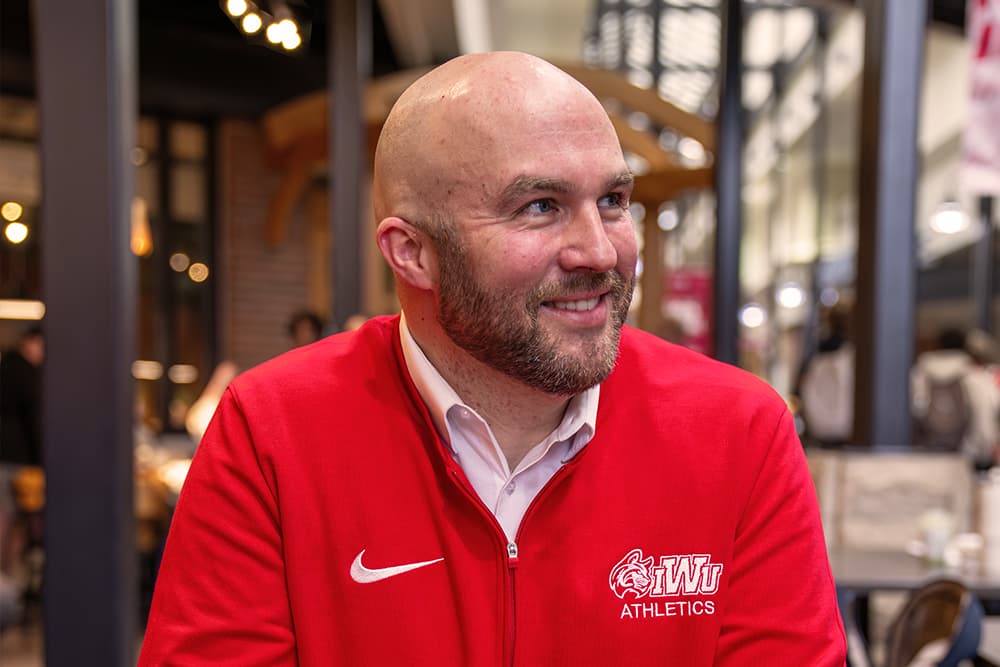
For Michael Zolman, student body chaplain on IWU’s Marion campus and a leader in the Spiritual Formation Office, moments like these reveal one of the deepest currents shaping life at IWU.
“Over the past four years here at IWU, I’ve seen God move in powerful ways,” Zolman says. “One of the clearest ways has been through the movement of prayer on our campus.”
Prayer chapel is one of several spiritual rhythms emerging from collaboration between Chapel and the Spiritual Formation Office (SFO). At the close of the 2024–2025 academic year, student leaders in SFO gathered to pray for renewed spiritual life on campus. Under the guidance of Campus Pastor Andrea Summers, D. Min., they discerned three rhythms for the coming year: Prayer Chapel, Family Chapel, and House Parties.
Together, those rhythms invite students not only to attend worship but to participate in practices that shape discipleship.
Formation in Community
At IWU, those rhythms do not remain confined to chapel spaces. They extend into residence halls, friendships, and daily campus life.
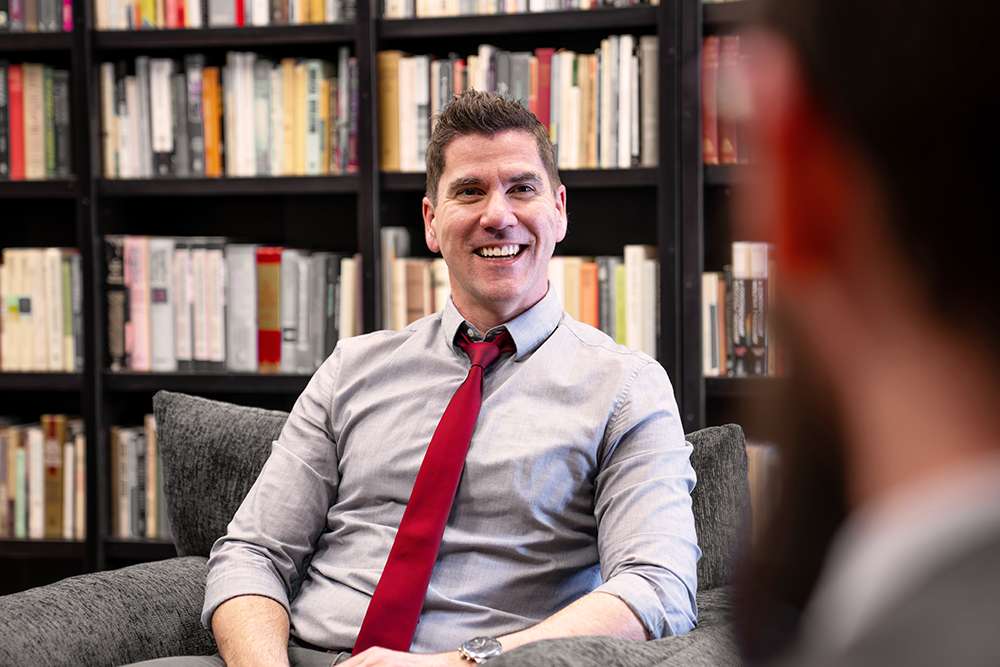
Brian Jaworski, Ph.D., vice president for student development, believes the environment students inhabit plays a crucial role in that process.
“The environment in which you launch an arrow impacts its trajectory,” Jaworski says. “It impacts its speed and the accuracy of the target.”
Student Life helps shape that environment through mentorship, residence life, and peer leadership. Resident assistants, small group leaders, and student mentors create spaces where faith conversations continue beyond formal gatherings.
These everyday relationships reinforce the spiritual practices students encounter in chapel.
For Summers, that approach reflects the Wesleyan tradition itself. John Wesley formed smaller communities where believers prayed together, confessed honestly, and pursued holiness in shared life.
“We have always been a tradition more interested in shaping people than winning arguments,” Summers says. “Our theology matters deeply, but it is always grounded in real life.”
Rhythms That Form
Across campus, spiritual formation takes shape through overlapping rhythms of partnership. Chapel forms students through worship and prayer. Student Life reinforces those rhythms through relationships and accountability. Athletics, community engagement, and student organizations contribute to the same work.
House Parties provide one example of that collaboration. Organized through SFO and supported by student leaders across campus, the monthly gatherings combine worship, teaching, and shared life. Zolman says the goal is to help students see that formation does not happen in isolated moments.
“Students are learning that worship is not limited to singing or hearing the Word preached,” he says. “God is present in every moment of life together.”
Planning these gatherings often involves partnerships with the Student Activities Council, Student Government Association, Ignite, and other campus groups.
The result is a community where discipleship is not owned by one office but shared across the university.
“We are trying to cultivate disciples who will leave this place and pour their lives out for Christ,” Summers says. “That requires rootedness.”
At IWU, that rootedness grows through prayer, friendship, accountability, and partnerships across campus that help students learn to follow Jesus together.