 Doctor of Physical Therapy (DPT)
Next Start |
Doctor of Physical Therapy (DPT)
Next Start |
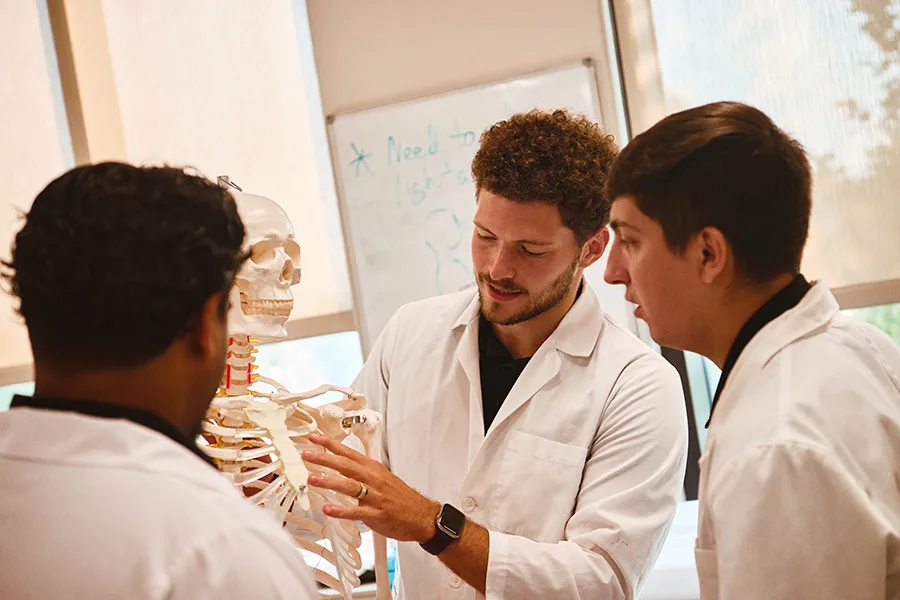
IWU's Doctor of Physical Therapy Program is relaunching!
The program features a comprehensively redesigned, fully integrated curriculum. Recruitment and admissions are now underway for a select cohort of 28 students beginning June 2027. Apply today.Indiana Wesleyan University (IWU) is relaunching its Doctor of Physical Therapy Program with a new cohort beginning June 2027, and recruitment and admissions are underway now. Offered through the School of Nursing and Health Professions, the relaunched program features a comprehensively redesigned curriculum that delivers a more integrated, streamlined educational experience. From the first semester, students connect foundational science, movement science, clinical skills, professional development, evidence-based practice, and clinical education—building knowledge and skills together rather than in isolation.
With a targeted enrollment of 28 students, the program is intentionally small. Every student learns in a close-knit environment with individualized attention from faculty who are invested in their development as clinicians and as people.
Rooted in IWU's Christ-centered mission, the DPT Program forms compassionate, skilled health care professionals who are prepared for excellence in clinical practice, a life of service, and effective interprofessional collaboration, all shaped by the integration of faith and learning.
Join a program designed to prepare you for clinical excellence and professional success.
DPT Virtual Open Houses
Join us for a live virtual session to learn more about our Doctor of Physical Therapy program, curriculum, admissions, and student life.
The relaunched DPT curriculum has been rebuilt from the ground up as one connected experience. Rather than treating each subject as a separate track, the redesigned curriculum weaves six areas of study together so that what students learn in the classroom, practice in the lab, and apply in the clinic reinforce one another at every stage.
A deep grounding in anatomy, physiology, and the sciences that underpin human health.
Advanced study of how the body moves, adapts, and recovers across the lifespan.
Hands-on examination, evaluation, and intervention techniques developed from the start of the program.
Formation in ethics, leadership, communication, and the character of a servant-hearted clinician.
The ability to find, evaluate, and apply current research to guide patient care decisions.
Supervised patient care experiences integrated throughout the program, not saved for the end.
Small Cohort. Big Impact.
The relaunched program targets an enrollment of just 28 students per cohort. That number is intentional. A small cohort creates a personal, collaborative learning environment where faculty know every student by name, mentoring is built into the everyday rhythm of the program, and each student's development as a clinician receives individualized attention. You will not be a face in a lecture hall. You will be a known and invested-in member of a learning community.
Industry Outlook
APTA forecasts demand for physical therapy services to grow by 14.7%, significantly outpacing general population growth of 8%.
Nearly 2× Faster GrowthSource: American Physical Therapy Association
Projected Growth
National Benchmark
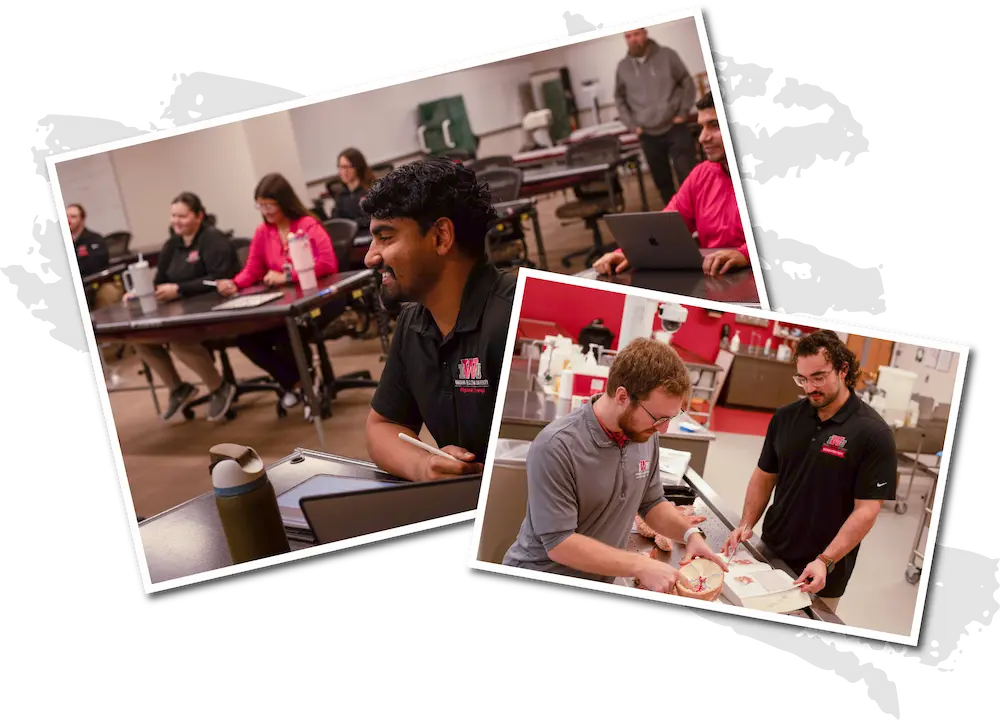
Graduates of the DPT program are prepared to deliver exceptional, evidence-based care as movement specialists. The curriculum develops skills to:
Purpose-Driven Practice
IWU's DPT Program develops compassionate, skilled health care professionals who pursue excellence in clinical practice and understand physical therapy as an act of service. Students learn to work effectively alongside professionals across the health care team, and every part of the program reflects IWU's commitment to the integration of faith and learning, preparing graduates to care for the whole person with skill, integrity, and empathy.
Pursue the highest standards in clinical practice.
Approach physical therapy as an opportunity to serve others.
Care for each person with skill, integrity, and empathy.
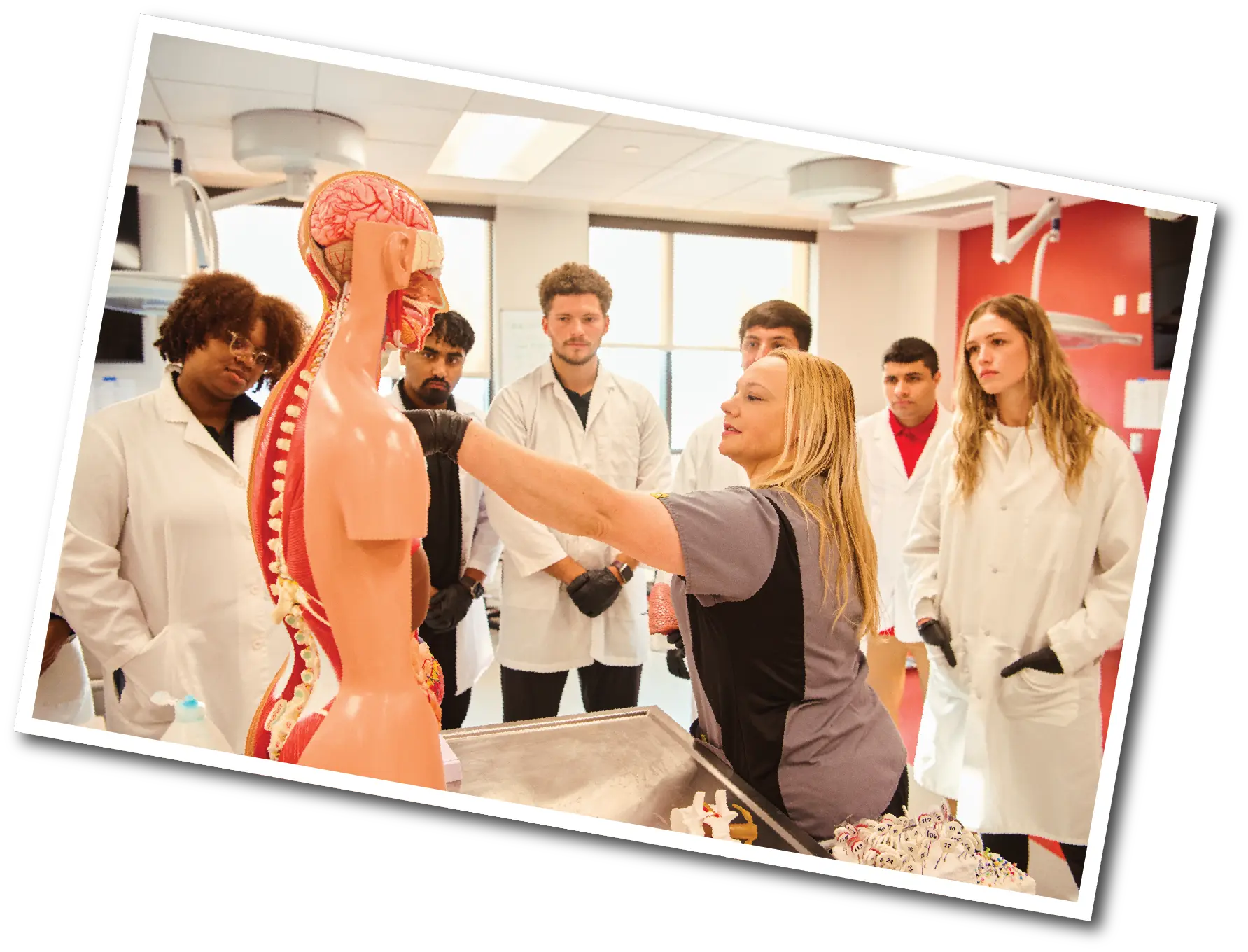
Students are introduced to patients in their first semester of the program and gain hands-on experiences using the concepts, behaviors, and techniques introduced in class the same week.
Just the right length of time for an introductory full-time experience and serves to reinforce the learning that occurs in our ICEs.
Progressively longer in length to allow students to be an asset at their clinic and refine the skills necessary to achieve entry-level competency.
Graduates of IWU's DPT program are prepared to step confidently into clinical practice, lead patient care teams, and serve their communities as skilled, compassionate physical therapists. With a strong foundation in evidence-based practice, clinical experience, and professional ethics, DPT graduates are equipped to make a lasting impact in a variety of healthcare settings.

Our DPT faculty bring real-world clinical expertise and a passion for teaching to every course and clinical mentorship experience. Get to know the professors who will guide you through your doctoral journey.
Outcome Data 2025/2026
| Year | Graduation Rate | Employment Rate | First-time Pass Rate | Ultimate Pass Rate |
|---|---|---|---|---|
| 2024 | 90.9% | 100% | 68.4% | 89.5% |
| 2025 | 85.2% | 100% | 57.9% | 94.7% |
| 2026 | 100% | In Progress | 80.0% | 80.0% |
| 2-year Average | 86.8%* | 100%^ | 65.5%* | 89.7%* |
*Average for 2025 and 2026
^Average for 2024 and 2025
The information below applies to students enrolled in the IWU Doctor of Physical Therapy Program between January 1, 2027, and December 31, 2027.
| Program Length (excluding breaks) | 120 weeks |
|---|---|
| Program Length (including breaks) | 130 weeks |
| Clinical Education Travel Required | No |
| Cost Category | Year 1 | Year 2 | Year 3 | Total |
|---|---|---|---|---|
| Tuition (Private Institution) | $40,419 | $40,419 | $26,946 | $107,784 |
| Institutional Fees (Full-time Student) (Includes general institutional fees, health insurance, recreation, etc.) |
$260 | $260 | $330 | $850 |
| Other Program-related Expenses (Includes: required texts, laboratory fees, and other program costs for the entire technical program.) |
$2,160 | $1,015 | $785 | $3,960 |
| Total Cost of the Program (Includes: tuition, fees and other program costs for the entire program.) |
$42,819 | $41,674 | $28,061 | $112,554 |
Students are encouraged to explore cost‑of‑living estimates for potential locations: MIT Living Wage Calculator
*These are costs experienced by students enrolled in the program between Jan. 1, 2024 – Dec. 31, 2024. Annual costs are estimates and may be subject to increases. Students should contact the program for further information related to costs
| DPT-specific financial assistance | No |
|---|---|
| DPT‑specific scholarships | No |
| Graduate assistantships | No |
Note: Other opportunities may exist at the institution for financial support. Please contact us for further information.
Students may also visit the APTA Financial Solutions Center for additional guidance.
| Average DPT Program Debt (2025 Graduates) | $120,960 |
|---|---|
| Average Total Student Loan Debt (2025 Graduates) | $135,098 |
Yes. IWU's Doctor of Physical Therapy Program has relaunched, and recruitment and admissions are underway now for a new cohort beginning June 2027.
The curriculum has been comprehensively redesigned into a more integrated, streamlined experience that connects foundational science, movement science, clinical skills, professional development, evidence-based practice, and clinical education throughout the program.
The program targets an enrollment of 28 students per cohort, creating a personal learning environment with individualized attention and close faculty mentorship.
The next cohort begins in June 2027. Prospective students are encouraged to request information or apply now.
DPT students learn from faculty with extensive clinical, teaching, and research experience across physical therapy specialties.
Dr. Haley Juber is a pediatric physical therapist with additional certification in aquatic physical therapy. Her clinical experience includes providing outpatient physical therapy services to children as well as working with babies and families in a Neonatal Intensive Care Unit (NICU) and an associated NICU Follow-up Clinic.
Dr. Phillip Palmer, DPT Program Director, has more than 45 years of physical therapy experience in the United States and internationally. His background includes clinical practice, higher education, physical therapy program development, and service with the Federation of State Boards of Physical Therapy, including work related to the National Physical Therapy Examination (NPTE).
Dr. Priya Pockyarath brings experience in outpatient physical therapy, clinic leadership, orthopedics, and sports medicine. She holds a Graduate Certificate in Orthopedic Manual Physical Therapy and is a Gymnastics Sports Medicine Certified Practitioner. Her research interests include low back pain in female gymnasts.
Students with questions about financial aid should contact the Financial Aid Office for assistance with available resources, eligibility, and other financial aid concerns.
Students gain experience through several components of the program, including international service learning, clinical education, and advanced clinical practice electives.
During the program, students participate in an international travel experience with program-related travel costs included in tuition. Students also begin engaging in clinical practice through Integrated Clinical Experiences (ICE), including wellness activities and pro bono clinical services in the local community.
Students complete advanced clinical practice electives as well. Previous elective offerings have included advanced musculoskeletal, neuromuscular, and specialty practice topics, with opportunities such as LSVT certification preparation.
The DPT program prepares graduates to become physical therapists who can examine, diagnose, treat, and help prevent movement dysfunction and impairment. Physical therapists may work in settings such as hospitals, outpatient clinics, schools, rehabilitation environments, sports facilities, and other healthcare settings.
Throughout the program, students develop the clinical knowledge, technical skills, professional judgment, and evidence-based decision-making abilities needed for contemporary physical therapy practice.
The DPT curriculum follows a sequenced, lock-step format in which students progress through courses designed to build on knowledge and skills developed in previous academic terms. Students must successfully complete the required coursework in each term before advancing to higher-level courses.
Together, the courses prepare students to integrate foundational knowledge, clinical skills, evidence-based practice, and professional behaviors in preparation for physical therapy practice.
After earning the DPT degree, graduates must meet applicable licensure requirements, including passing the National Physical Therapy Examination (NPTE). Licensure requirements vary by state, and some states may provide temporary licensure options for eligible new graduates while they prepare to take the NPTE.
Clinical education is integrated throughout the DPT program. Students must successfully complete Integrated Clinical Experiences, an Early Clinical Experience, and three Terminal Clinical Experiences.
Students work individually with the Director of Clinical Education to help plan their clinical progression and placements. Rather than relying solely on a placement lottery, the program considers students' interests, experiences, and professional goals when developing their clinical education plans.
Students are also encouraged to participate in faculty-mentored research. A Research Night is held each summer to showcase student work, and students have presented research at state, national, and international meetings. Student research has also contributed to peer-reviewed publications.
Yes. The DPT is an on-campus program, and students participate in in-person classes, laboratories, and clinical education experiences.
Clinical placements may take place in Indiana, elsewhere in the United States, or internationally depending on available placement agreements and the student's individualized clinical education plan. Students are responsible for arranging and covering living expenses associated with clinical placements.
Students typically spend approximately 20–25 hours per week participating in classes, laboratories, and clinical experiences. Additional time is required outside scheduled activities for studying, class preparation, assignments, and other academic responsibilities.
IWU's accelerated DPT program is designed to be completed in approximately 2.5 years, allowing students to complete the degree and become eligible to sit for the national board examination sooner than students in many traditional three-year programs.
DPT students have access to university support services available to students on the Marion campus, including academic, career, technology, and other student support resources. Students also receive program-specific guidance through faculty advising and mentoring.
Yes. DPT students are assigned faculty advisors who provide academic and professional support throughout the program. Previous cohorts have also participated in peer mentoring, pairing first-year students with students further along in the program.
These relationships provide opportunities for students to receive guidance as they develop academically, clinically, and professionally.
The DPT program uses structured clinical education experiences rather than traditional internships. Students participate in Integrated Clinical Experiences, an Early Clinical Experience, and Terminal Clinical Experiences that provide supervised, hands-on patient care experience.
Clinical experiences are completed in person and cannot be completed virtually.
The DPT program generally does not accept transfer students or transfer coursework. Prospective students with questions about previous coursework should contact the program for guidance regarding their individual circumstances.
Yes. Students are encouraged to participate in research under the supervision of DPT faculty. Student research is highlighted during an annual Research Night, and students have had opportunities to present their work at state, national, and international professional meetings. Some student research has also contributed to peer-reviewed publications.
IWU emphasizes intentional, relationship-centered investment in students. Faculty work closely with students through advising, clinical education planning, mentoring, research, and professional development.
The program also integrates early clinical experiences, individualized clinical placement planning, advanced clinical practice opportunities, international service learning, and evidence-based care within a Christ-centered educational environment.
Students who are motivated, committed to learning, and prepared for the demands of doctoral-level study tend to thrive in the DPT program. Strong academic preparation through a bachelor's degree and successful completion of prerequisite coursework can help students prepare for the rigor of the curriculum.
Success also requires students to invest significant time and effort in developing their clinical knowledge, professional skills, and ability to serve patients effectively.
Yes. Indiana Wesleyan University's Doctor of Physical Therapy program is accredited by the Commission on Accreditation in Physical Therapy Education (CAPTE).
Graduates must also meet applicable examination and state licensure requirements before practicing as physical therapists.
The DPT program refers to these experiences as clinical education experiences rather than Level I and Level II fieldwork.
Students begin working with the Director of Clinical Education early in the program to discuss their professional interests and develop an individualized clinical education plan. Integrated Clinical Experiences help students gain experience before beginning their final full-time clinical rotations.
The three Terminal Clinical Experiences are progressively structured as 8-week, 10-week, and 12-week rotations. During these experiences, students work with patients representing a variety of diagnoses, ages, and backgrounds at different clinical sites and in multiple rehabilitation settings.
The curriculum exposes students to a broad range of patient populations and physical therapy practice areas. The primary goal is to prepare students for entry-level physical therapy practice rather than specialization in a single area.
Students develop experience working with patients across the lifespan and encounter multiple areas of practice through coursework, laboratories, and clinical education.
NPTE preparation is integrated into the program in several ways. The curriculum exposes students to the major areas of physical therapy practice addressed on the National Physical Therapy Examination.
Students also participate in an exam-preparation workshop led by a professional test-preparation provider. The workshop helps students identify content areas that need additional study and strengthen their test-taking strategies.
Students complete multiple practice examinations and develop individualized study plans based on their performance and areas needing further development.
Evidence-based practice and clinical reasoning are integrated throughout the DPT curriculum. Courses draw on contemporary physical therapy practice and current evidence, and students apply clinical reasoning as they evaluate information and make decisions related to patient care.
Research coursework provides focused preparation in evidence-based practice. Students learn to search professional databases for current research, evaluate the quality and relevance of available evidence, and apply appropriate findings to physical therapy practice.
Your future in physical therapy starts here. Take the next step toward a career built on skill, compassion, and purpose.