Research begins with questions. What is God revealing in what He has made? And who will be served by what we learn?
For 16 summers, the Hodson Research Institute (HRI) has given undergraduates the chance to move beyond studying science and take part in discovery themselves. Established in 2011 through the generosity of the Arthur Hodson Foundation, HRI provides a fully funded summer experience in which IWU-Marion students work alongside faculty mentors on projects with scientific and human significance.
This year, 19 students joined nine faculty-mentored projects under HRI Program Director Benjamin Linger, Ph.D., associate professor of chemistry. One team, led by Tara Renbarger, Ph.D., associate professor of biology, tested store-bought probiotic and prebiotic supplements and found that nearly every product contained bacteria capable of breaking down red blood cells. The team is now sequencing those bacteria to learn what the findings mean for consumers. Other projects ranged from crop yields and the gut microbiome to neuron detection, artificial intelligence, and personalized health care.
19
Students Participated in the Hodson Research Institute in 2026
300
Undergraduates Engaged in Research Since 2011, With Many Continuing to Medical School, Doctoral Programs, and Science Careers
Source: Hodson Research Institute, August 2026
HRI has nearly 300 undergraduates who have taken part, many of whom continue to medical school, doctoral programs, and careers in science. For two of them, the summers shaped not only what came next but who they became.
Alex Lovins ’20 says his 2018 HRI research provided the hands-on training that helped prepare him to teach chemistry. Hannah Hartzler Lovins, Ph.D., ’20, spent three summers in HRI research before earning a doctorate in molecular, cellular, and developmental biology from The Ohio State University. “These summers are where I found my calling for teaching and mentoring undergraduates in exploring God’s Creation!” she said.
“These summers are where I found my calling for teaching and mentoring undergraduates in exploring God’s Creation!”
Today, both are assistant professors at the University of Findlay, welcoming students into research the way IWU faculty once welcomed them: asking questions alongside them, developing their abilities, helping young scientists discover what they can contribute.
That is the quiet arithmetic of mentorship, and it follows a pattern as old as the faith itself: what is received is meant to be passed on. What faculty invested in two students now multiplies through every student they will teach. For scholars like the Lovinses, research is a way of exploring what God has made with rigor, humility, and wonder, and of putting knowledge to work for others. Discovery becomes an act of care, and the laboratory is one more place Christ’s presence permeates.
IWU’s Fast Forward degrees give working adults like Jill Cohen a faster, flexible path to pursue their calling without sacrificing academic rigor. For Cohen, what she learns today is already making an impact in her classroom.
IWU helped Eliyahna Brothers recognize her gifts and put her faith into action through leadership and service. Now, the impact of that formation extends through hundreds of students serving communities across Grant County.
IWU’s program at Plainfield Correctional Facility gives incarcerated students an opportunity to build knowledge, faith, and hope for the future. Through education and mentorship, students are discovering that their past does not have to define who they are becoming.
IWU is responding to a changing higher education landscape with purposeful innovation, creating accessible pathways that meet the needs of students, employers, churches, and communities. Through it all, the university remains firmly grounded in biblical truth and its mission to prepare Christ-centered leaders.
IWU welcomed more than 1,000 Wesleyan Church leaders and delegates to campus for the 15th General Conference. Through High-Impact Hospitality, the IWU community demonstrated a spirit of service, excellence, and Christ-centered care.
IWU’s strong financial position reflects steady growth, careful stewardship, and continued investment in its mission. These resources help expand scholarships, strengthen programs, and create new opportunities to serve students.
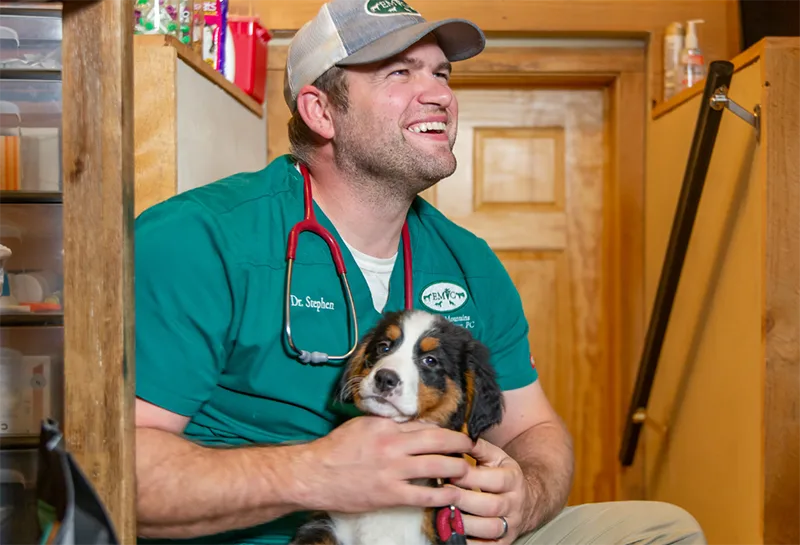
IWU shaped Stephen and Elisabeth Laudermilch to see their careers as opportunities for service and ministry. Today, that Christ-centered calling reaches patients, employees, families, and communities far beyond IWU.
Wesley Seminary helped prepare Jenn Petersen for global leadership, shaping how she listens, serves, and leads across cultures. Today, her work with World Hope International extends that impact through a partnership reaching communities around the world.