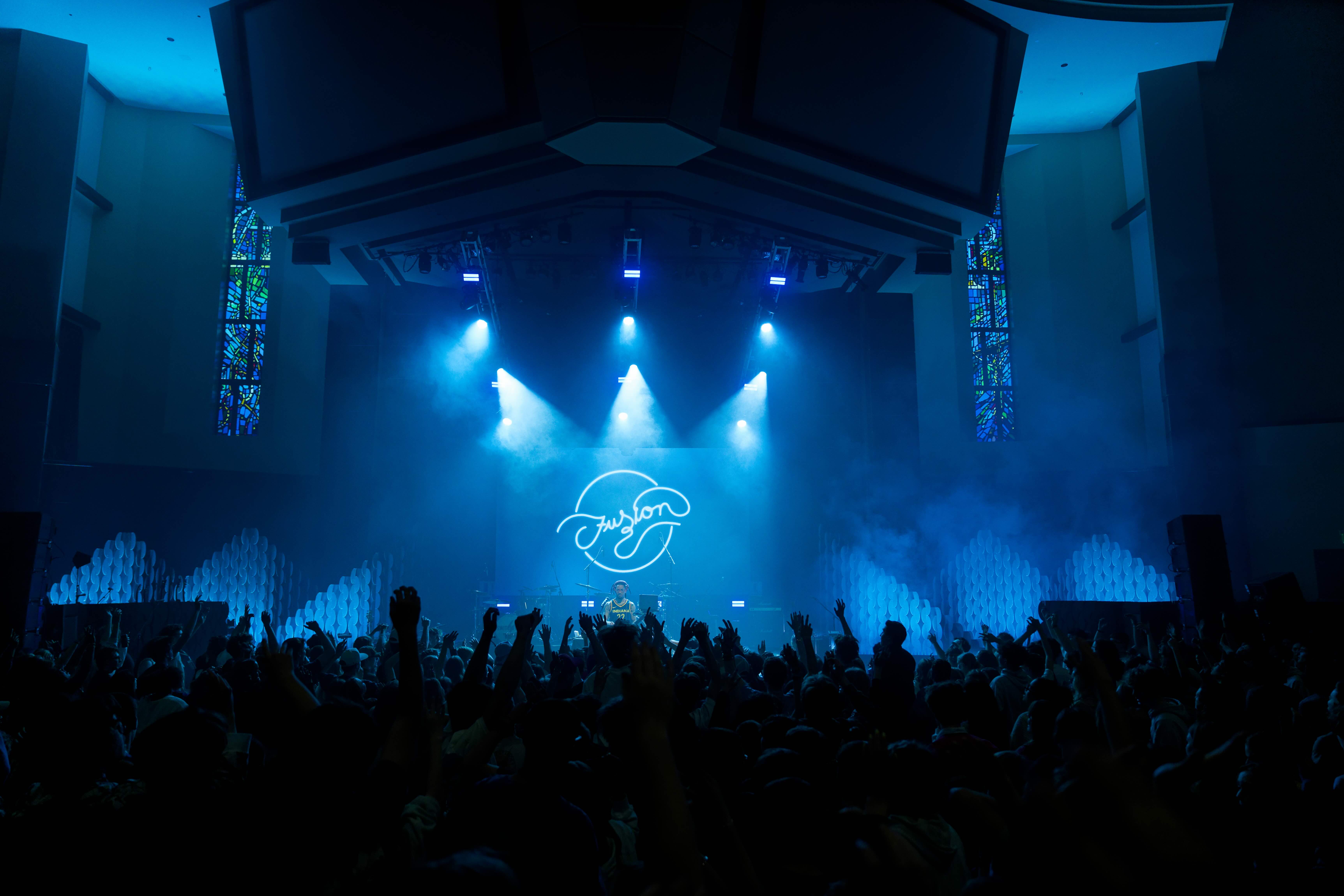
Indiana Wesleyan University's (IWU) Theatre Guild concluded its fall production of Shakespeare's The Tempest last month, reimagining the classic tale as a Norse saga steeped in Viking aesthetic. The production, which ran Nov. 6-15 in the Phillippe Performing Arts Center, was a striking departure from traditional stagings, effectively reflecting the Common Learning Theme for the 2025-26 and 2026-27 school years focused on the Christian imagination.
Thought and Memory
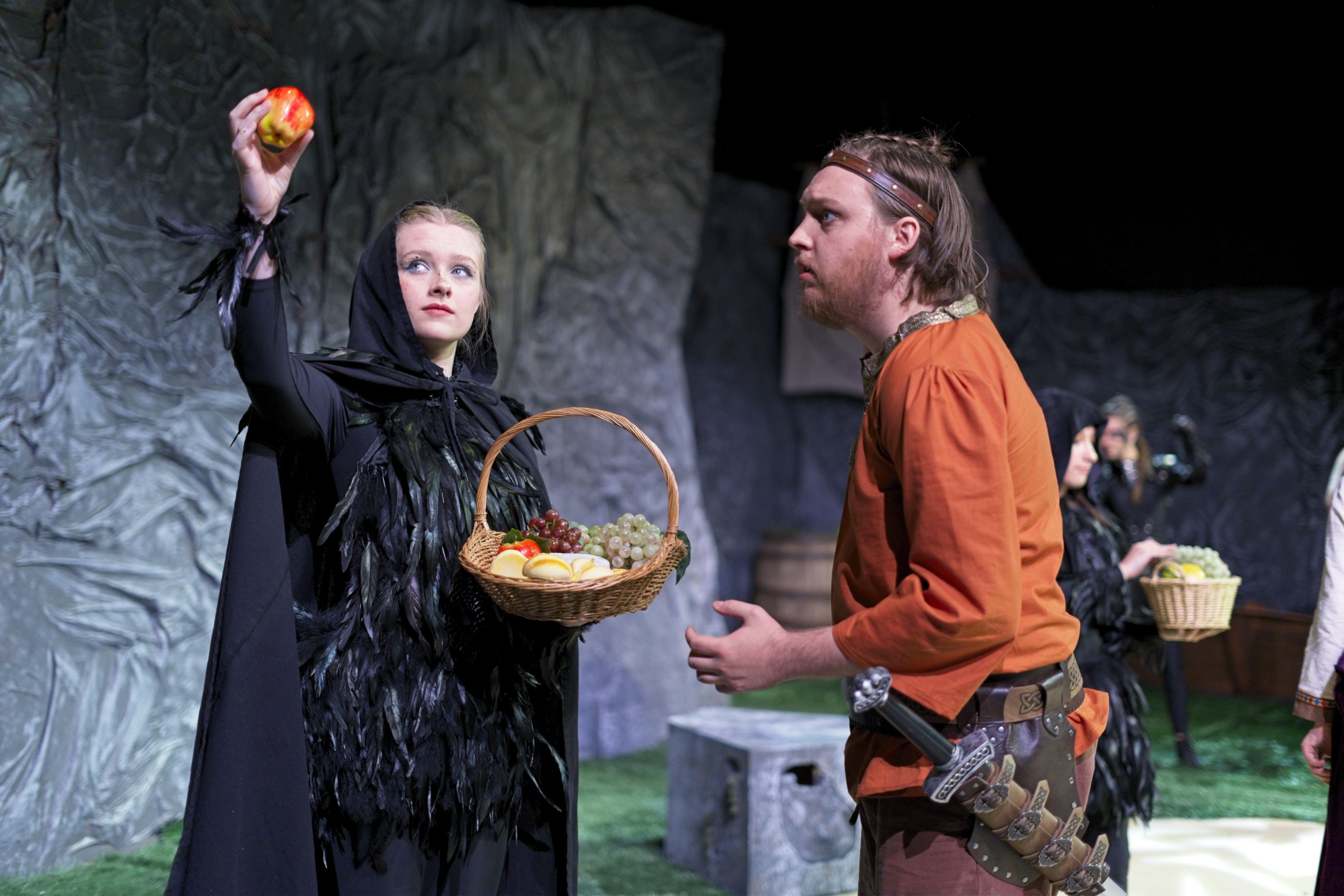
At the heart of this adaptation lies an innovative choice: splitting the role of Ariel, traditionally played by a single male actor, between two female performers.
"Instead of one actor playing Ariel, we had two women, reflecting the Odin myth of his two birds, Huginn and Muninn, ‘thought’ and ‘memory,’" Director Steve Wood, PhD, explained. The decision emerged organically from Shakespeare's own text, where Prospero repeatedly calls Ariel "my bird" and "chick." This textual clue became the foundation for reframing the entire production as a Norse saga centered on Prospero as Odin and Ariel as his ravens.
The dual Ariels created a dynamic interplay throughout the performance. One embodied memory, recalling information for Prospero but forgetting their shared history with the witch Sycorax. The other represented thought, accessing Prospero's power and imagination to execute his supernatural commands. This division reflected the constant tension in Shakespeare's original work between remembering the past and wielding power in the present.
"Two actors playing Ariel also added a unique challenge," Wood noted, describing how Prospero had to navigate two different spirits sharing one power while racing against time to escape the island before his agreement with Ariel expired.
Why Vikings?
The choice to forge Norse trappings was more than mere novelty. The IWU Theatre Guild has established a tradition of taking creative license with Shakespeare productions, following the Bard's own example of adapting stories across cultures and time periods.
"We wanted creative freedom to put the text in conversation with other perspectives," Wood said, "digging into the possibility that it's a universal story with archetypes and themes relevant to other myths and even our own present context."
The Norse framework proved remarkably compatible with Shakespeare's themes. Sibling rivalries, betrayals, maidens, fertility goddesses, monsters, and revenge all found natural parallels in epic mythology. The adaptation also provided first-time student designers with opportunities for ambitious experimental work in sets, costumes, and lighting.
The production's use of pagan Viking imagery might seem surprising for a Christian university, but Wood argues that Shakespeare himself walked this same line. "This play unapologetically walks the razor-thin edge of pagan versus Christian even without Norse overtones," he explained, drawing parallels to Macbeth and its exploration of Catholic and Protestant dogmas alongside witchcraft and magic.
Wood sees Prospero as a Faustian figure, penning a deal with the supernatural for survival while ultimately seeking redemption through divine providence. The character speaks throughout the play about heavenly music freeing him from his reliance on magic, and in the epilogue, he entreats the audience to pray for him.
Runes, Braids, and Verse
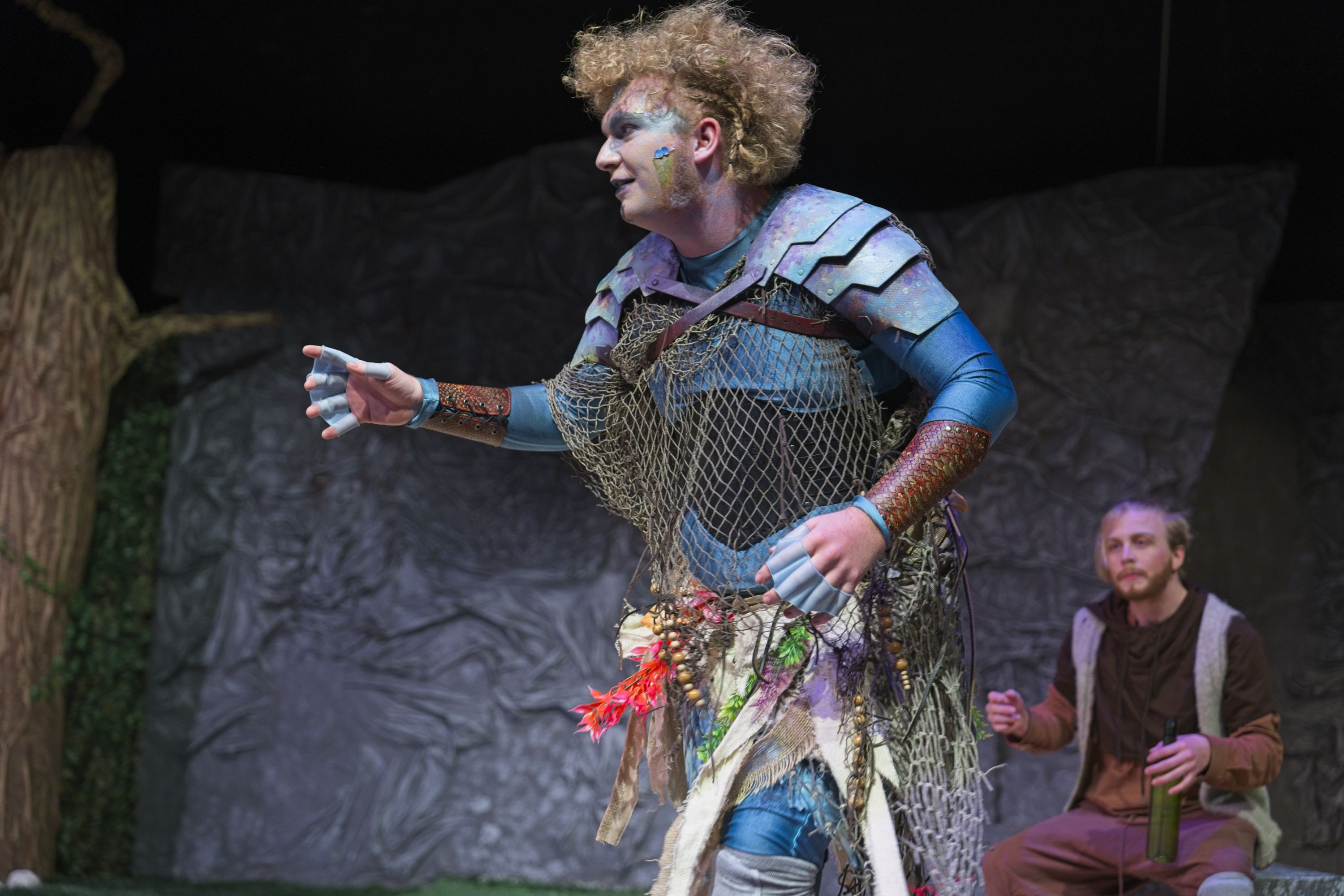
The production's design elements immersed both performers and audiences in the Viking world. The stage was decorated with Futhark runes, the symbolic alphabet of the Old Norse world, which the creative team had originally hoped to illuminate during various scenes. While technical limitations prevented this effect, the runes provided rich material for worldbuilding discussions about their meanings and potential supernatural significance.
Hair, makeup, and costuming became avenues for invention. Drawing on both Viking cosplay culture and historical records, the production team embraced wild, long hair and didn't hesitate to use extensions. "It certainly gave actors a stronger sense of their characters' power and potential," Wood said.
Perhaps most notably, the production featured original music composed by an IWU composition major, who put four of the original lyrics to music and composed an incidental love theme for Miranda and Ferdinand as well as a final Odinic hymn performed after curtain call. This represented the first time in several decades that an IWU Shakespeare production included original compositions for the Bard's lyrics.
"Shakespeare plays were noted for their live music," Wood observed. "We have his lyrics but not the melodies." The addition of new compositions honored Shakespeare's multimedia storytelling approach while showcasing the talents of IWU's music students.
A Universal Story
By transplanting The Tempest into a Norse setting, the IWU Theatre Guild demonstrated that Shakespeare's exploration of power, forgiveness, and redemption transcends any single cultural context. The production invited audiences to see familiar themes through a distinct, mythological lens while maintaining the essential humanity at the story's core.
As Wood noted, Shakespeare himself constantly adapted stories across cultures for his English audiences. This IWU production continued that tradition, proving that great stories can be retold in countless ways while retaining their power to move and challenge us. The Christian imagination is one of innovative iteration, building upon unexpected roots to glorify God through divinely human creativity.