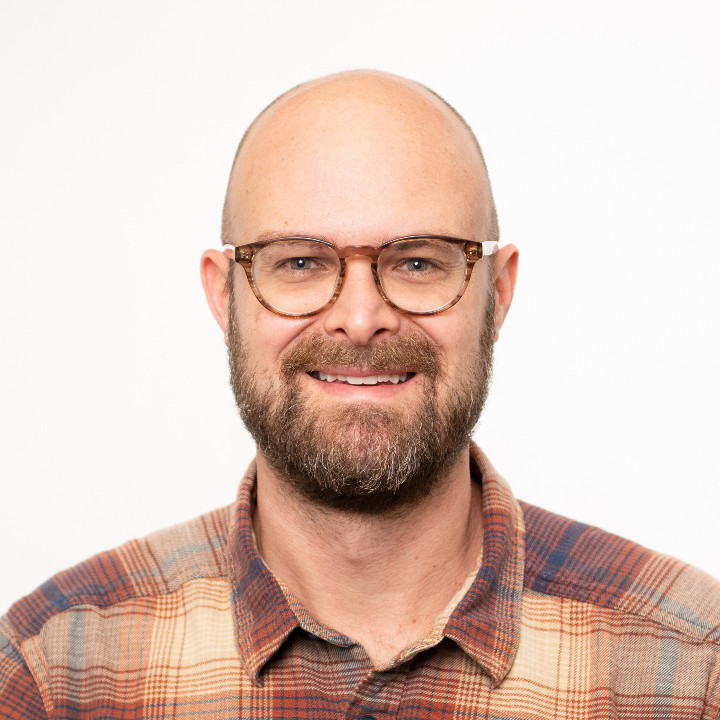
Dr. Runyan's research and teaching interests are multidisciplinary and involve questions at the interface of neuroscience, philosophy, and theology. In particular, he is interested in questions concerning the formation, expression, and impact of dispositions and virtues.
While his work is cross-disciplinary, Dr. Runyan uses experience sampling and ecological momentary assessment to approach these questions. His primary teaching responsibilities revolve around philosophical psychology, neuropsychology, and psychological science.
INTERESTS
- Human constitution
- Human agency and free will
- Dispositions and virtues
- Learning and memory
- Experience sampling/Ecological Momentary Assessment (EMA)
DPhil
University of Oxford , 2009
MSt
University of Oxford , 2005
MS
University of Texas Health Science Center at Houston , 2003
BA
Wheaton College , 2001
Learn more about Jason's education, professional experience, and more!
Books:
- Runyan, J. D. Human Agency and Neural Causes. Palgrave Macmillan, 2013.
- Morin, A., Runyan, J. D., & Brinthaupt, T. M. (Eds.). Inner Experiences: Theory, Measurement, Frequency, Content, and Functions. Frontiers in Psychology, 2015.
- Runyan, J. D. “Emergence and causal agents: A reply to Moreland.” In Neuroscience and the Soul. Eerdmans, 2016.
- Runyan, J. D. “Including or excluding free will.” In New Frontiers in Science in the Era of AI. Springer Nature, 2024.
- Dash, P. K., Runyan, J. D., Blum, S., et al. “Putative Cerebral Mechanisms of Memory.” In The Amnesias. Oxford University Press, 2005.
Peer-reviewed journal articles:
- Runyan, J. D., Brooks, N. W. (2022). “Evidence for the standard model, multiple trace theory, or the unified theory?” Cognitive Neuroscience.
- Runyan, J. D., Moore, A. N., Dash, P. K. (2019). “Coordinating what we’ve learned about memory consolidation.” Biobehavioral and Neuroscience Review, 100, 77–84.
- Runyan, J. D., Fry, B. N., Steenbergh, T. A., et al. (2019). “Using experience sampling to examine links between compassion, eudaimonia, and prosocial behavior.” Journal of Personality, 87(3), 690–701.
- Runyan, J. D. (2018). “Agent-causal libertarianism, statistical neural laws, and wild coincidences.” Synthese, 195(10), 4563–4580.
- Dougherty, D. A., Steenbergh, T. A., Runyan, J. D., et al. (2018). “Smartphone Delivery of a Hope Intervention.” PLoS ONE.
- Fry, B. N., & Runyan, J. D. (2017). “Teaching empathic concern and altruism in the smartphone age.” Journal of Moral Education, 47(1), 1–16.
- Runyan, J. D. (2016). “Events, agents, and settling whether and how one intervenes.” Philosophical Studies, 173(6), 1629–1646.
- Runyan, J. D., & Steinke, E. (2015). “Virtues, ecological momentary assessment/intervention, and smartphones.” Frontiers in Psychology.
- Morin, A., Runyan, J. D., & Brinthaupt, T. M. (2015). Editorial. Frontiers in Psychology.
- Runyan, J. D., Steenbergh, T. A., Bainbridge, C., et al. (2013). “A smartphone ecological momentary assessment/intervention app…” PLoS ONE.
- Steenbergh, T. A., Runyan, J. D., et al. (2012). “Neuroscience exposure and perceptions…” Journal of Substance Abuse Treatment.
- Runyan, J. D., & Kreitzer, M. (2010). “The neuroscience of religious experience.” Christian Scholars Review, 39(2).
- Dash, P. K., Moore, A. N., Kobori, N., Runyan, J. D. (2007). “Molecular activity underlying working memory.” Learning and Memory.
- Blum, S., Runyan, J. D., & Dash, P. K. (2006). “Inhibition of prefrontal protein synthesis…” BMC Neuroscience.
- Runyan, J. D., Moore, A. N., & Dash, P. K. (2005–2004). Multiple peer-reviewed articles in Learning and Memory, Hippocampus, Neurobiology of Learning and Memory, Journal of Neuroscience, and Brain Research Reviews.