The Division of Mathematics, Engineering, and Computer Sciences offers three math-related, two computer-related, and one engineering-related majors. Our three departments, Mathematics, Engineering, and Computer Information Sciences, work closely together, with some students choosing to work towards degrees in both areas.
Our curricula are frequently updated and benchmarked with recommendations from alumni, professional organizations, and current students. Classes in our division are small, and you will graduate with many close friends, both students and faculty members.

Melvin Royer
PROFESSOR | PH.D.; MS
Dr. Royer joined the faculty at Indiana Wesleyan in 2001 and is excited to be involved in a deeply Christ-centered university. He has taught Mathematics at community and technical colleges as well as at the university level. Dr. Royer's career interests include mathematical analysis, differential equations, electrical systems engineering, and post-secondary mathematics education. He has a strong personal interest in volunteer teaching of English in Asia.
Discover your God-given potential and begin impacting the world in Jesus' name through a degree in Mathematics, Engineering or Computer Science.
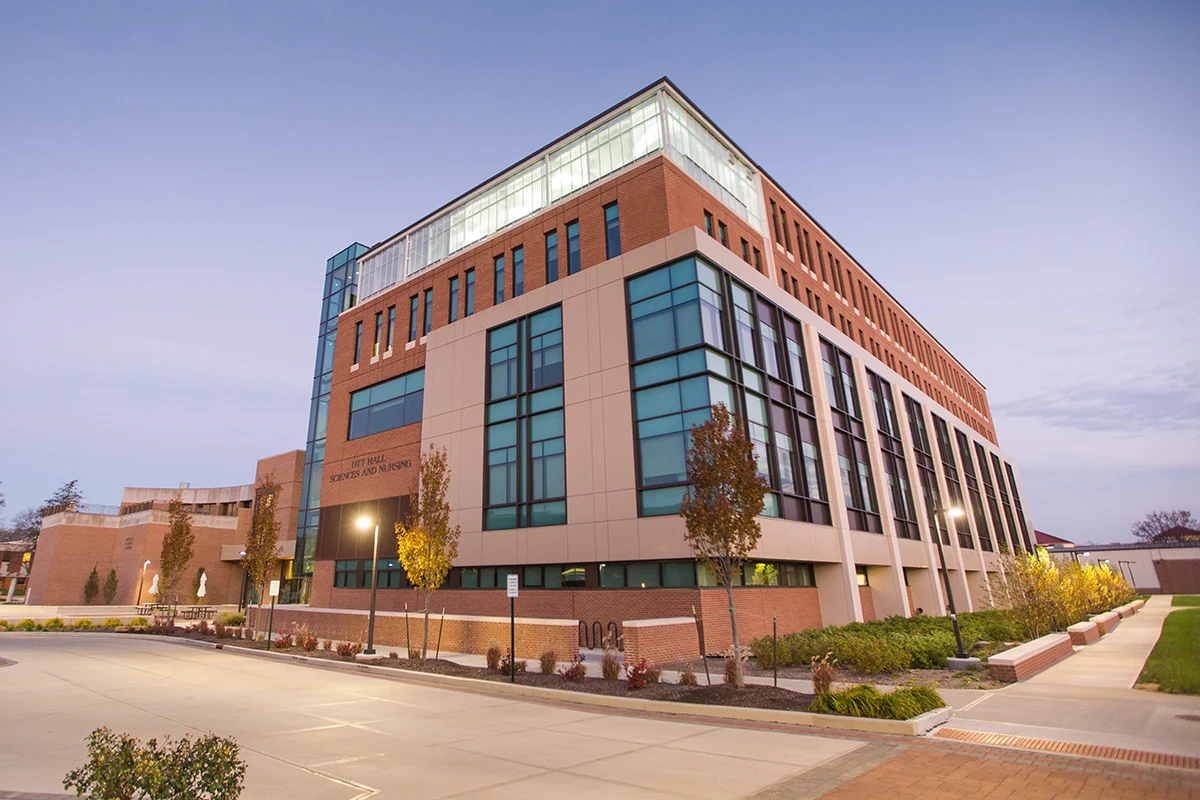
Mathematics and Computer Information Sciences now occupies most of the first floor in Ott Hall of Sciences and Nursing.
Faculty offices are located in an office suite immediately adjacent to our classrooms and laboratories. To encourage student/faculty interaction, the suite was designed with generous collaboration space directly outside the faculty offices.
The CIS Lab supports cross-platform class projects involving various tablet/phone technologies and 3-D printing, while the Modeling Lab allows for the capture and study of realistic data for projects in applied mathematics and statistics courses. The CIS Department operates a server providing a Linux platform and supporting various course projects.
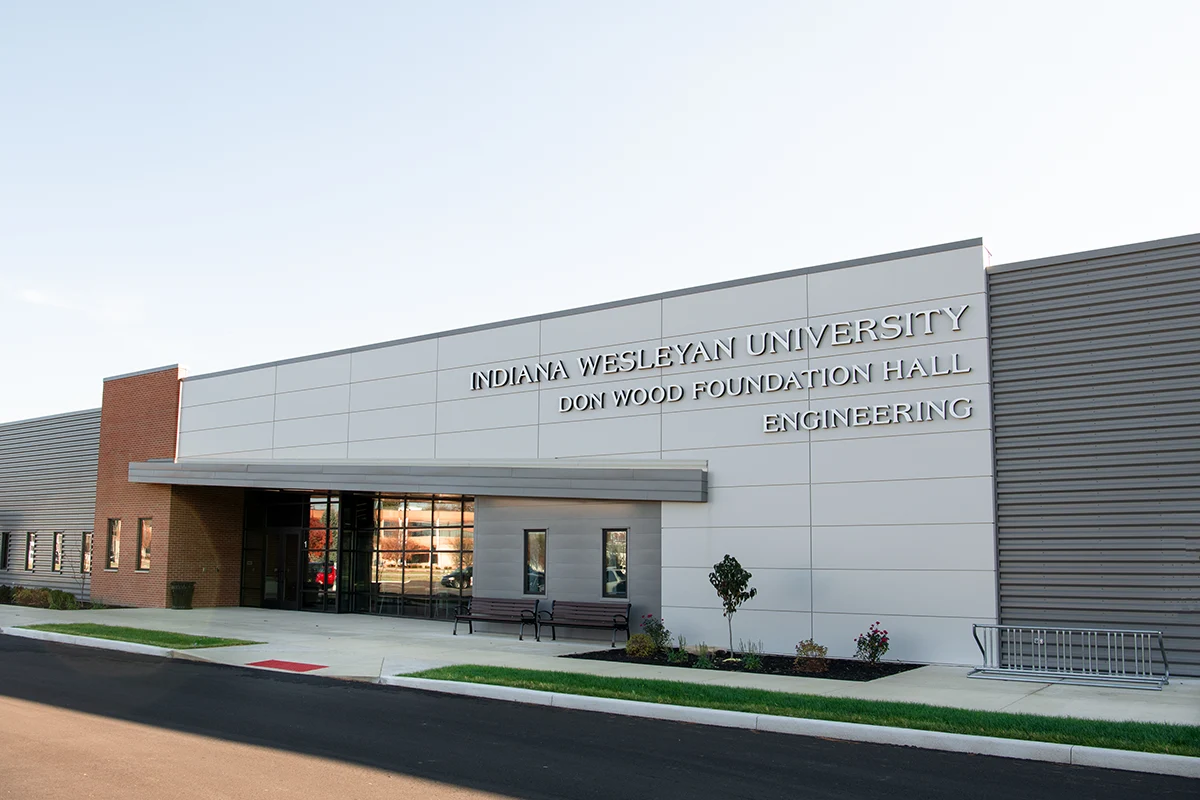
IWU Engineering students benefit from the new, world-class engineering building, located a short walk from campus housing.
The IWU Computer Science Club is open to all students who have an interest in computers and technology.
Our club hosts educational workshops on a biweekly schedule. In the past, these workshops have included things like building Ethernet cables, tearing down PCs to learn about what goes into making one, and learning the basics of web development.
Along with educational workshops, our club occasionally hosts LAN parties. These parties are a way to socialize, get to know fellow members, and just have fun playing games.
Institute of Electrical and Electronics Engineers ( IEEE )
IEEE is the world's largest professional association dedicated to advancing technological innovation and excellence for the benefit of humanity. IEEE publishes journals with a global readership, hosts conferences, sets electronic technology standards and protocols, and organizes professional and educational activities. IEEE is essential to the global technical community and to technical professionals everywhere, and is universally recognized for the contributions of its members and their efforts to improve global conditions through technology.
Consortium for Computing Sciences in Colleges ( CCSC )
CCSC is a nonprofit organization focused on promoting quality computer-oriented curricula as well as effective use of computing in smaller institutions of higher learning that are typically non-research in orientation. It supports activities which assist faculty in making appropriate judgments concerning computing resources and educational applications of computer technology. The consortium also encourages the sharing of expertise, effective curricula and efficient technological applications. The consortium is concerned with the advancement of major programs in both Computer Science and Computer Information Systems, and with the use of computers in the Liberal Arts and Sciences.
Mathematical Association of America ( MAA )
For nearly 100 years, the MAA has advanced the cause of undergraduate-level mathematics. Among other activities, the MAA sponsors student contests and poster sessions; provides career services; hosts local and national meetings for undergraduate, graduate and professional mathematicians; publishes expository materials in print and online; holds faculty workshops for professional and curriculum development; and advocates for mathematics education and research in public policy settings.
American Mathematical Society ( AMS )
The AMS works to further the interests of mathematical research and scholarship. It serves an international community through its publications, meetings, advocacy, and other programs which promote mathematical research and understanding, support mathematical education at all levels, advance the status of the mathematics profession, and encourage a popular awareness of mathematics and its connections to other disciplines and everyday life.
Society of Actuaries ( SOA )
The Society of Actuaries is the largest professional organization serving actuarial members and the public in the United States. The SOA desires actuaries to be the leading professionals in the measurement and management of risk. As a means toward this goal, it provides education and professional development, conducts research, and promotes high professional standards.
National Association for Gifted Children ( NAGC )
The NAGC is an organization of parents, teachers, educators, community leaders and other professionals who address the unique needs of children and youth with special gifts and talents. The NAGC defines a gifted person as someone who shows, or has the potential for showing, an exceptional level of performance in one or more areas of expression.
National Council of Teachers of Mathematics ( NCTM )
The NCTM is a public voice of mathematics education that provides guidance and resources for developing and implementing mathematics curriculum, instruction and assessment that is focused on increasing student learning. It also advocates a culture of equity in mathematics education, provides professional development to stakeholders, engages in public and political activities to affect decision makers, and ensures integration of sound research in its activities.
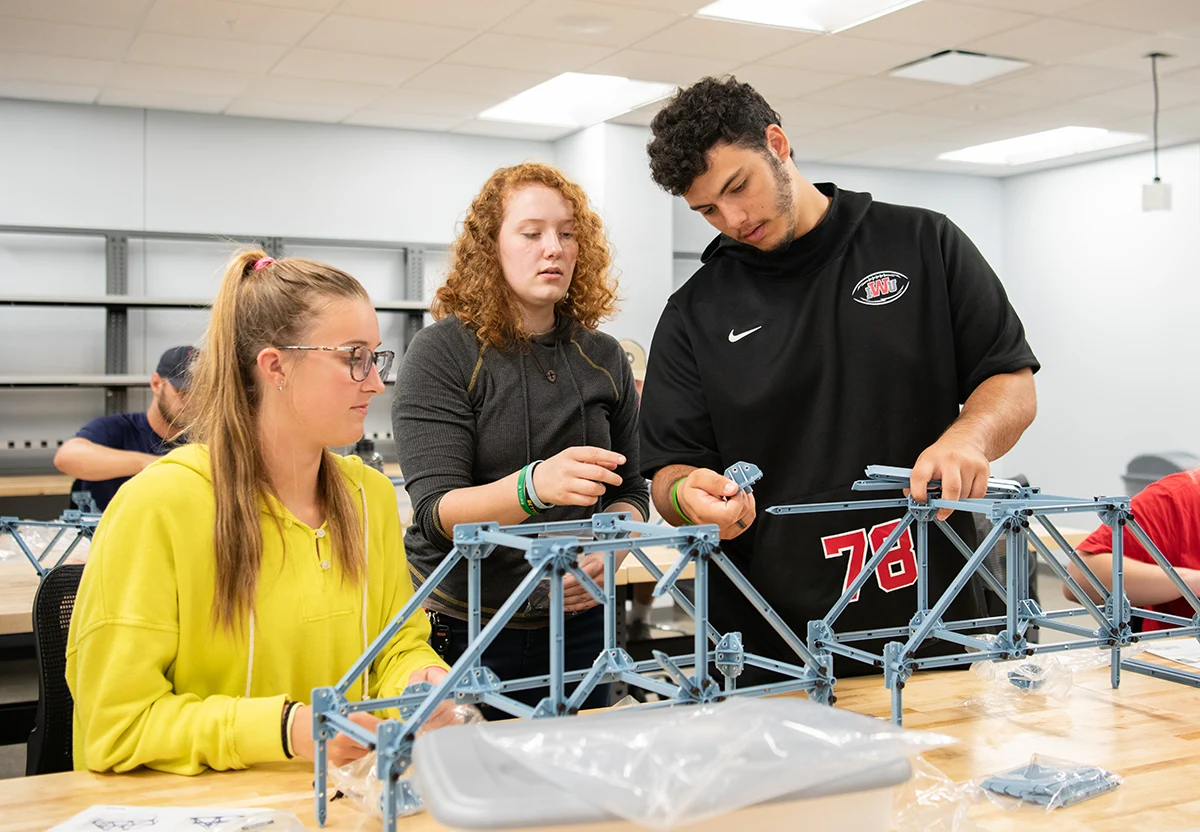
In addition to the financial aid available through the Financial Aid Office, the division faculty select recipients of 6 to 10 donor-funded scholarships per year ranging from $800 to $2000 each.
Most of the scholarships are for students who have financial need (as demonstrated by filing the FAFSA), good character, and a GPA of at least 3.0. One scholarship is available for incoming freshmen. Since we are a small division, applicants who meet the criteria have a reasonable chance of receiving a scholarship.
Applications are due at the beginning of March for the following academic year. In January, an announcement and link to the application form will be sent to current students in the Math/CIS Division Review.
Incoming freshmen who wish to apply may contact the division chair rebecca.wakeman@indwes.edu
● Undergraduate Research – Every mathematics major participates in a two-semester faculty-mentored research project, with opportunities to present at conferences and on campus.
● Math Interdisciplinary Majors – Complete required internships, often in data analysis, quantitative consulting, or applied research settings.
● Conferences & Presentations – Students regularly present work at the weekly IWU Math/CIS colloquium and sometimes externally, such as at the annual math conference at Miami University of Ohio.
● Mathematics Education – Includes supervised student teaching, content knowledge prep for licensure exams, and mentorship from experienced faculty.
● Applied/Interdisciplinary Mathematics – Requires internships with businesses, government, or non-profits, giving students workplace experience before graduation.
● Secondary mathematics education.
● Actuarial science and applied quantitative fields.
● Graduate school in mathematics, education policy, or bioinformatics.
● Roles in finance, government agencies, or research institutions.
● Faculty bring real-world backgrounds in actuarial science, engineering, and education.
● Every student completes research or an internship before graduation.
● Small class sizes ensure personal mentoring and strong faculty/student relationships.
● Program blends theoretical rigor with practical application, preparing graduates for diverse career paths.
● Senior Design Project – A year-long partnership with an external client, often a nonprofit. Students design, test, and refine a software product that solves a real problem.
● Internships – Students complete internships with IT firms, healthcare systems, or other companies. Some pursue multiple internships before graduation.
● Applied Projects – Students work on modifying existing code, upgrading software systems, and delivering applied solutions.
● Partnerships with nonprofits, hospitals, IT offices, and regional tech firms.
● Students often secure roles in cybersecurity, programming, or IT support during the academic year and summer.
● While not certification-driven, students are encouraged to pursue certifications such as AWS Cloud, data analytics, or cybersecurity.
● Faculty help students align certifications with career goals and internship experiences.
● Ethics integration — students are trained to consider the human and social impact of computing decisions.
● Hands-on design project ensures every graduate has client-facing project experience.
● Faculty have industry backgrounds in AI, cybersecurity, and applied data science.
● Supportive mentoring culture helps students navigate fast-changing technology fields with confidence.
● Teaching labs built into most courses combine lecture and hands-on experience in the same space.
● Students move between theory (problem solving, lectures) and practice (equipment use, prototyping, testing).
● Labs help students build confidence applying classroom concepts to real-world systems.
● Senior design projects, such as a robotic cornhole system with automated score tracking.
● Class projects and labs integrated across specializations (mechanical, civil, electrical).
● Faculty provide support, but students lead in brainstorming, designing, and building.
● Internships are strongly encouraged for experience, income, and career exploration.
● Students typically complete one or two internships during their four years.
● Internships can lead directly to full-time job offers.
● IWU partners with companies through career fairs (on campus and at nearby colleges) and referrals from the Career Office.
● Placements are most common in neighboring counties or students’ home states.
● Application-driven focus – Engineering design and real-world application are emphasized across the curriculum.
● Industry orientation – The program prepares graduates to enter the workforce immediately, excelling as Christ-centered professionals.
● Faith integration – Students are encouraged to see their engineering careers as a calling and a way to serve the Lord through excellent work in their fields.